
Editor's note: This article is general information based on publicly available sources we found online.
Some Mediterranean cruise mistakes cost €2. Others cost a whole sailing. The 21 below come in editorial order, not by price, and each has a rule, date or price behind it. The one at #1 involves a card most readers over 65 already carry, and it can cost five or six figures.
21. Paying a website for the EU travel permit that does not exist yet

More than 150 websites already offer an EU travel permit that nobody can apply for. The permit is ETIAS, the online authorization the EU plans for visa-free visitors. The EU’s own page says it is not in operation and collects no applications.
Euronews reported in August 2026 that the launch is delayed indefinitely. It had been expected in 2027, and even that was uncertain. Frontex, the EU border agency, warns that using one of these sites can mean being significantly overcharged or having your personal data misused, Dutchreview reported in October 2026.
When the real permit opens, the European Commission says it will cost €20 and be free for travelers under 18 or over 70, though Euronews reported in 2025 that they must still apply.
Do nothing yet: nobody can sell you a permit that nobody can issue. Do not give your passport details to any site that offers to apply for you, and wait for the official EU site or app. The border system that is already running comes at #13.
20. Booking July or August without a plan for 104°F
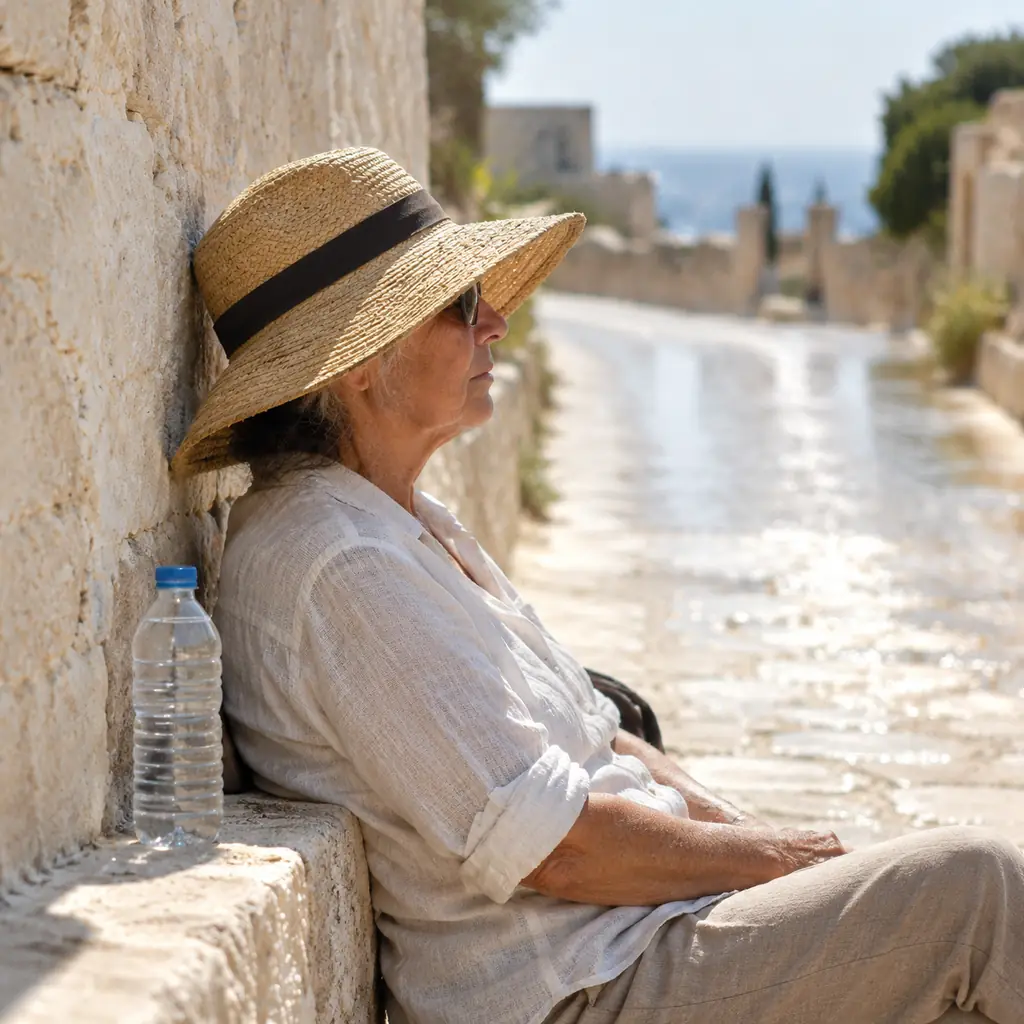
At 104°F, Athens shut the Acropolis for four hours in the middle of a July day. On July 8, 2025, the antiquities authority closed it from 1 p.m. to 5 p.m. as temperatures reached 40°C, Anadolu Agency reported. On a ten-hour port day, that is 40 percent of your time gone.
Holland America’s Mediterranean guide puts June through August at 85 to 95°F with high crowds and peak pricing. Spring runs 65 to 75°F and fall 65 to 80°F, up to 20 degrees cooler, both with thinner crowds. The guide adds that August is a popular vacation month for Romans, so some shops and attractions may be closed.
Summer does bring the warmest sea, 70 to 80°F, and the guide says May water can be too cool to swim in. Better move: if July is your only window, keep the long walks for early and late hours and plan shade for midday.
19. Packing pills for the trip but not for the delay

A refill bought in Europe is a refill your Medicare drug plan will not pay for. Medicare.gov says Medicare drug plans do not cover prescription drugs you buy outside the U.S., so the pills you pack are the pills you have.
Pack enough for the whole trip plus several extra days, the CDC says, and carry all of it in your hand luggage, in the original containers. Suppose a canceled flight leaves you a night in an airport hotel and the blood-pressure pills are in a suitcase somewhere else.
Two more steps: the CDC suggests a letter from your clinician, on letterhead, listing each medicine by generic name and dose. It also warns that some countries do not allow certain medications, especially narcotics and psychotropic drugs, so ask the embassy or consulate of each country on your route before you pack. Bring your own seasickness remedy, too, because the CDC says over-the-counter medicine bought from the ship tends to cost more.
18. Walking up to Pompeii without a time slot
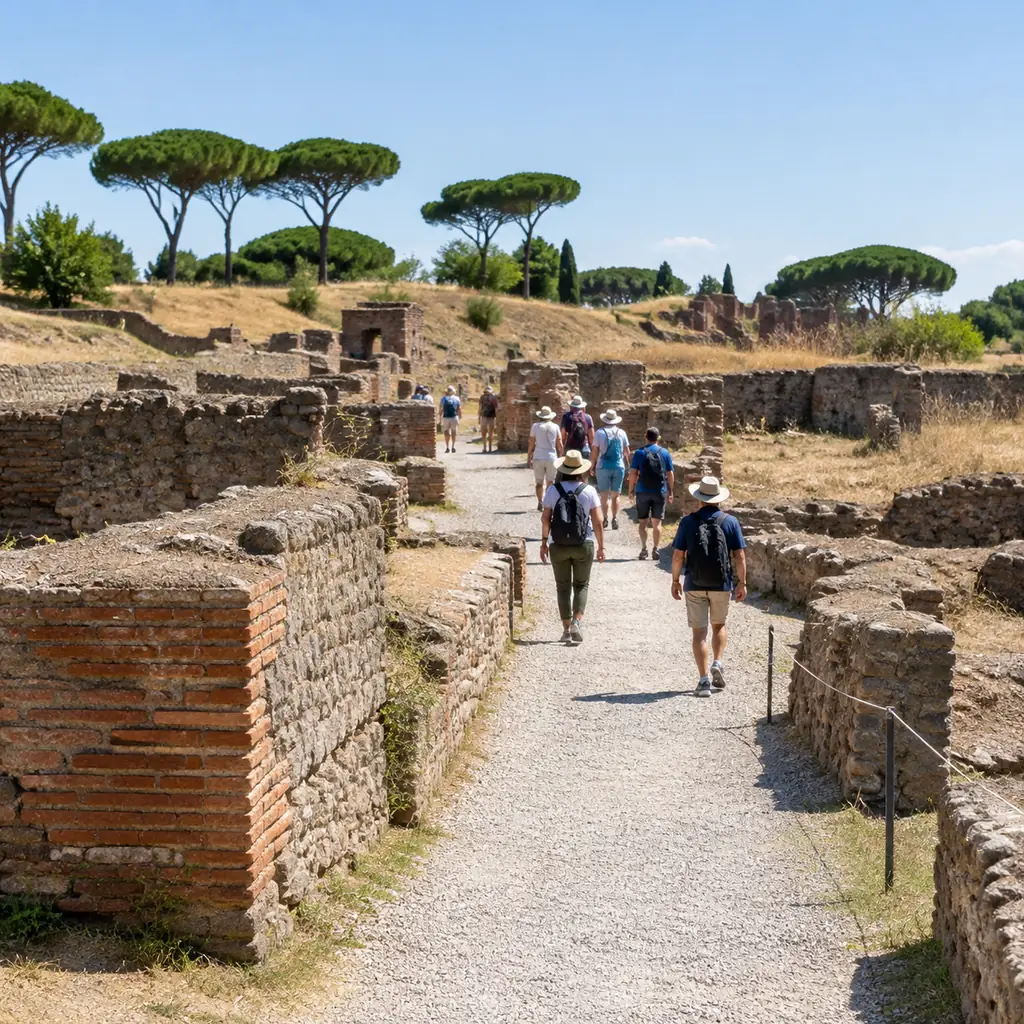
The Pompeii ticket that costs €5 more comes with a fifth of the morning places. The park’s €25 Pompeii+ adds the suburban villas and a shuttle bus, but only 3,000 of the 15,000 places between 9 a.m. and 1 p.m. go to it. The €20 Pompeii Express, which covers the ancient city only, gets 12,000.
The afternoon window, 1 p.m. to 5:30 p.m., holds 5,000. The park’s page applies these numbers from March 16 to October 14, and it caps each day at 20,000 entries on personal tickets. All three ticket offices sit inside the archaeological area.
Do this first: buy online before you go, as the park recommends, and pick the window that gets you back to the ship with time to spare. The page dates its prices from January 12, 2026, so check them again for your sailing year. If the Pompeii+ places are gone, Express holders can add the suburban villas route for €8, card only, at the Herculaneum Gate. Rome has a day-of-the-week problem at #14.
17. Saying yes when the card machine offers to charge you in dollars
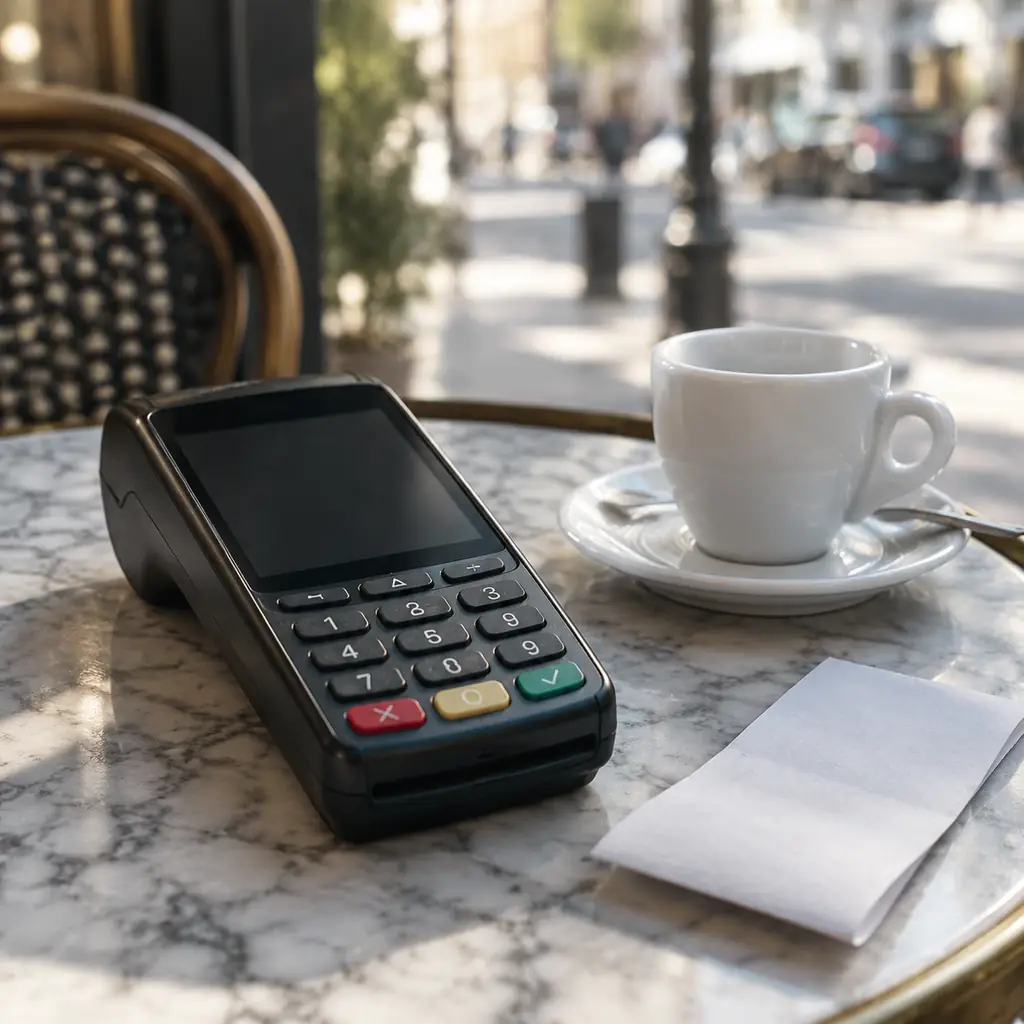
The friendliest question in Europe, “Pay in dollars?”, is the expensive one. Say yes and the merchant does the conversion, through its own bank or a specialist firm, instead of your card issuer. The offer can include a markup. Visa says the screen must show both amounts, the rate and any markup, and that the machine must not choose for you.
One public measurement is a 2016 Stiftung Warentest check in 13 non-euro countries, cited by the consumer group BEUC in 2017. It found the conversion added 2% to 5% to store payments and 2.6% to 12% to ATM withdrawals. It is old and ran outside the euro zone, so read the range as a guide, not a forecast.
The math: on $1,500 of card spending in stores, 2% to 5% is $30 to $75. Choose euros, and your own card issuer does the conversion. If details are missing or you feel pushed, Visa tells cardholders to decline and report it to the issuer. The first bill over $500 comes next.
16. Buying a drink package for a port-heavy week

Seven nights of Holland America’s Signature drink package costs a couple at least $783.30. The line listed the pre-cruise price at $55.95 per person per day in October 2026, for drinks priced at $12 and under, up to 15 a day. Every adult in the stateroom must buy it.
Even if every drink hits the $12 cap, each of you needs almost five a day to break even. Picture a port day: you leave after breakfast, walk a hot old town and come back near all-aboard, so the drinking hours are few. The line’s pages say a 20% service charge applies to beverage purchases and do not say whether it sits on top of the package price, so ask before you buy.
Some travelers would pay extra never to look at a bar tab, and that is fair. Our guide to Cruise Tips That Make Your Vacation Money Go Further shows how to run your own break-even. Holland America is the example here and in several items below. Other lines set their own prices and rules, so check yours.
15. Booking a morning flight home on disembarkation day
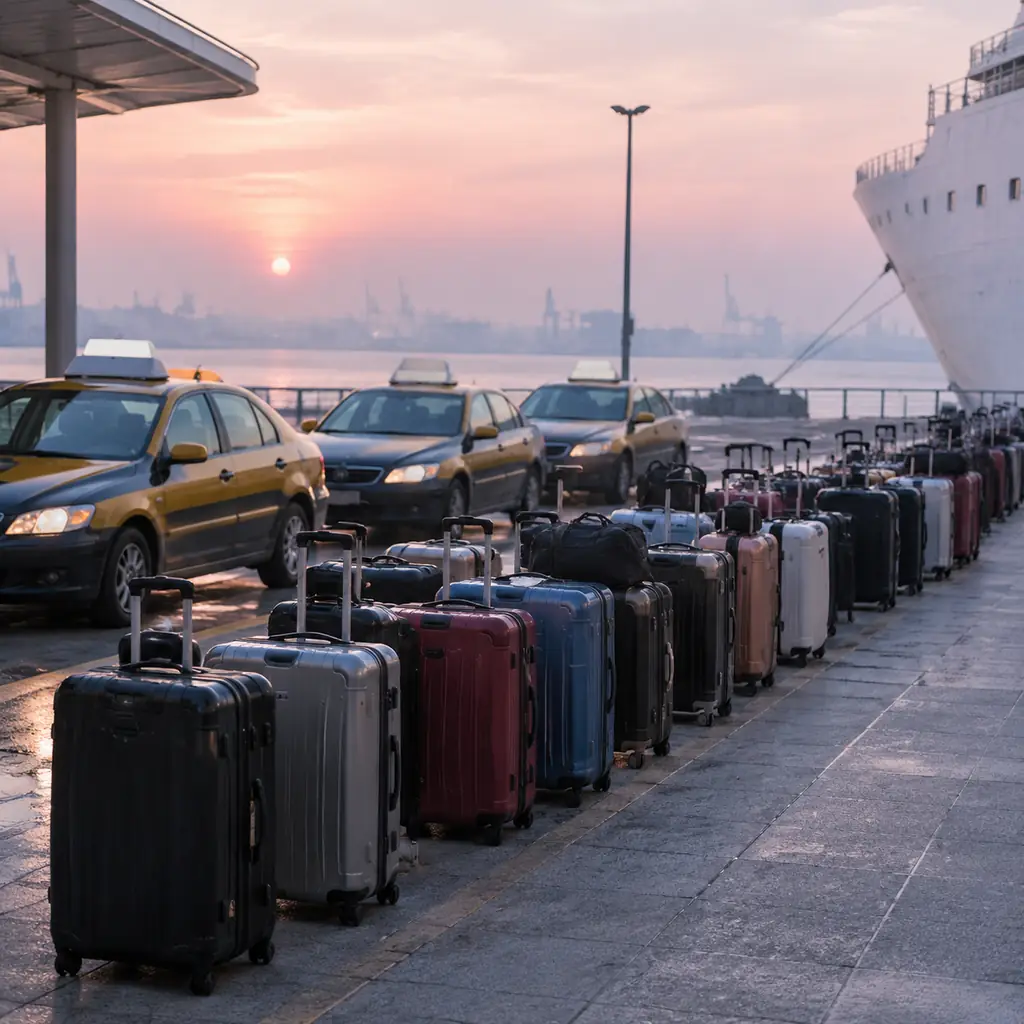
A morning flight home can be lost before you leave the pier. Holland America says disembarkation is usually finished two to four hours after the ship arrives, and it wants you at the airline counter three hours before an international flight.
Take a ship that docks at 6:00 a.m. If you are among the last off, at 10:00, a 1:00 p.m. flight needs you at the counter by 10:00, and you are still on the pier. A 9:00 a.m. flight is gone. Azamara’s April 2026 guide adds that border processing has slowed under the EU’s new entry system.
Book this instead: an afternoon or evening flight, or a night in the port city. The ship’s arrival time is on your itinerary, so check it before you buy the ticket. Guess wrong and the flight is the cost.
14. Planning your Rome day around the Vatican Museums without the calendar
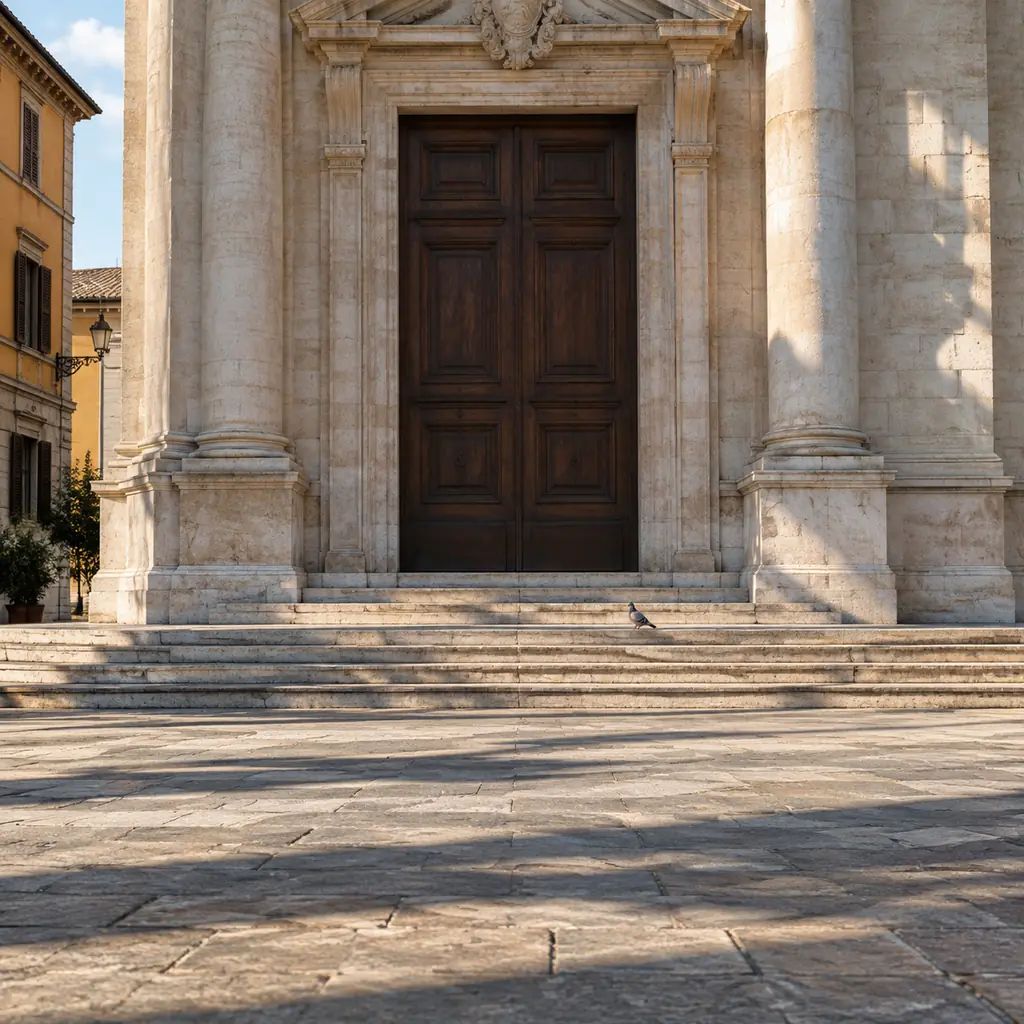
If your ship is in Rome on a Sunday, the Vatican Museums are shut, and no ticket changes that. The one exception is the last Sunday of the month, when the museums open free from 9 a.m. to 2 p.m. (last entry 12:30 p.m.).
The museums’ own 2027 calendar also closes them on Saturday, May 1, Tuesday, June 29, and Saturday, August 14 through Monday, August 16, plus November 1 and December 8. A full ticket is €20, or €25 with skip-the-line booking, and tickets cannot be refunded, so check your port date first. Rome’s other trap is smaller, and it comes at #11.
13. Treating the first passport line in Europe as a formality
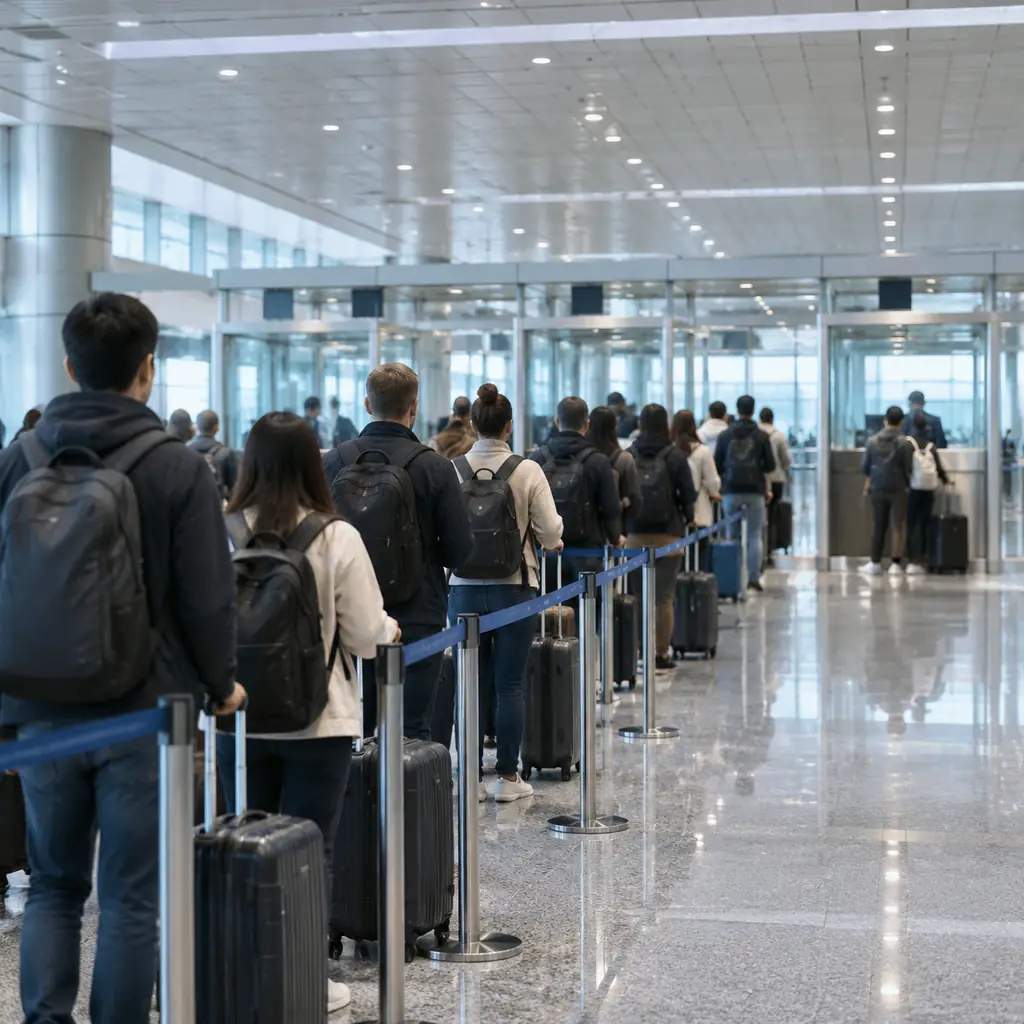
The first passport line you reach in Europe now takes your fingerprints, and in summer 2026 it cost some travelers their flights. The Entry/Exit System, known as EES, became fully operational on April 10, 2026, the European Commission says, and it replaces passport stamps with fingerprints and a face photo.
Euronews reported in August 2026 that EES brought huge airport queues and missed flights over the summer. Azamara’s April 2026 guide says registration happens at your first entry, takes a few minutes and is kept for three years, so later entries are faster. Children under 12 give a photo but no fingerprints.
Nothing to apply for: the guide says no application is needed in advance, so do not pay anyone who says otherwise. Do leave extra time on the way in, especially if you connect through a second airport (tight connections often work only on paper). And never put the border line right before something that will not wait, such as a ship leaving. More on that at #6.
12. Booking Dubrovnik, Santorini or Palma without checking the caps

Three of the Mediterranean’s best-known ports now limit cruise traffic, so your ship has to compete for a slot. Dubrovnik’s port authority says its 2027 policy holds cruise visitors in the inner city to an expected 4,000 at once, with a minimum stay of eight hours (twelve for ships carrying 4,000 passengers or more).
At Dubrovnik, when ships of equal priority want a slot over the limit, the first request wins and later ones are offered another time or date. Santorini’s port fund set a limit of 8,000 cruise passengers on the same day for 2025 and 2026 and said it would consider only minor changes from 2027. Palma allows three ships a day and only one over 5,000 passengers, and from 2027 to 2029 its summer daily average falls from 8,500 to 7,500 berths (passenger beds), the Majorca Daily Bulletin reported.
What it means: a line’s first-choice day for your sailing can move. #9 covers what your contract says then. Dubrovnik marks its posted arrival schedules subject to change, so look for the one that covers your sailing year.
11. Showing up at the Trevi Fountain with a pocket of coins

The Trevi Fountain now charges to get up close, and the gate wants a card, not coins. Rome’s tourism site says a €2 ticket is required to enter the basin, the part closest to the monument, daily from 9 a.m. to 10 p.m. since February 2, 2026. At the entrance it is card only.
Children under 5 and people with disabilities and their caregivers go in free. The city’s page lists the period as January 30, 2026 to December 31, 2027, so a 2027 sailing falls inside it. For two people the fee is €4, so buy online first or carry a card.
10. Booking tender ports without asking about mobility rules
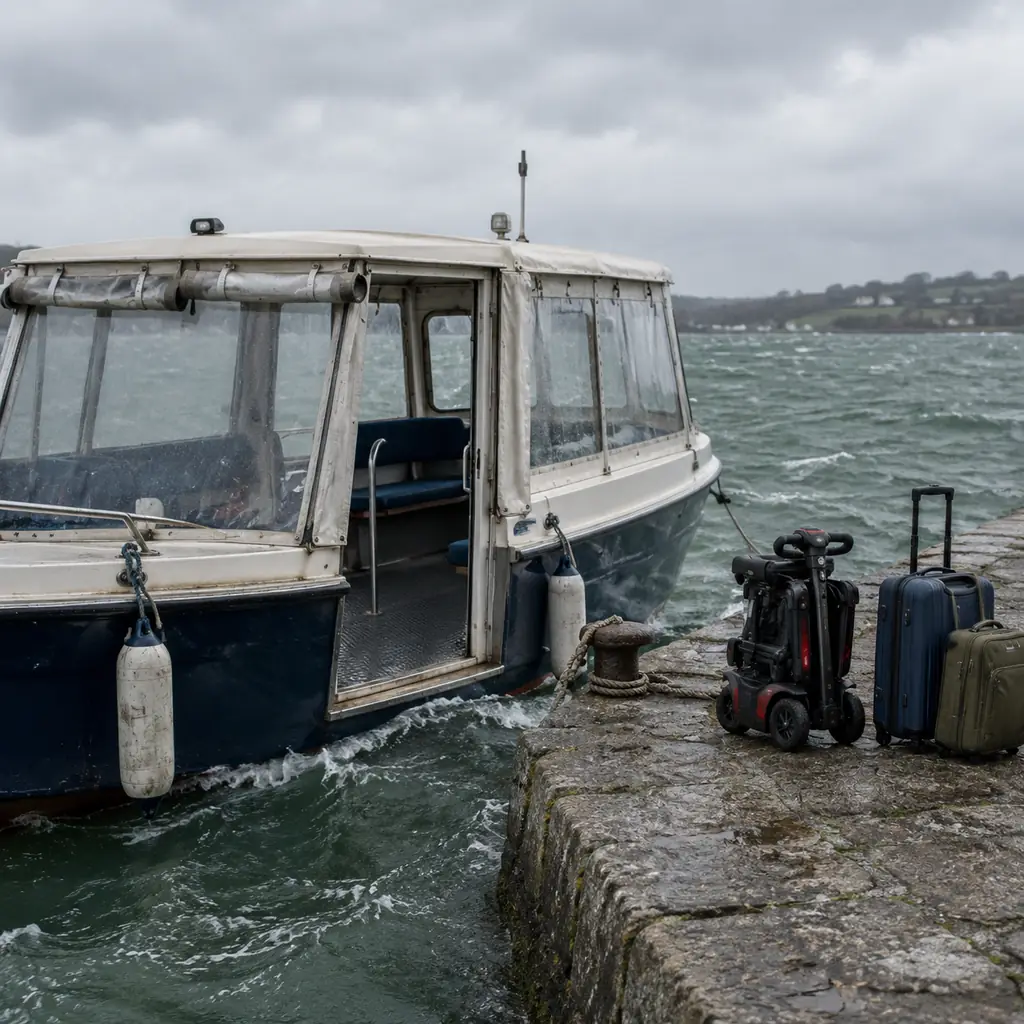
If you use a scooter or wheelchair, a tender port (where small boats carry you ashore) is where a cruise day can end before it starts. Holland America’s own tender list names Santorini, Mykonos, Kotor, Sorrento, Split and Monte Carlo, among others. The line says tendering may not be fully accessible to wheelchairs or scooters, and staff cannot move a device over 100 pounds without its battery. Most of its ships have tender-level elevators for rolling on and off, the line adds, but not all.
Wind, swells or extreme tides can stop the transfers, and the captain makes the final call. In certain ports, the line says, guests may be unable to go ashore at all. Two Mediterranean stretches, the Gulf of Lion and the Aegean Sea, have a reputation for rough water.
Ask first: which ports on your itinerary are tender ports (your itinerary details and booking confirmation list them), whether your ship has a tender-level elevator, and what your device weighs without its battery. Check the tender-port list twice, because itineraries change.
9. Assuming every port on the brochure is guaranteed
A line that swaps the port you booked the cruise for owes you no compensation. Any offer is a goodwill gesture, The Points Guy wrote in August 2024.
You are generally refunded for excursions you booked through the line and, in most cases, for port fees at skipped ports, so ask for both. If a substitute port is added, you might not get your money back. A third-party tour is not covered by the line, so ask that company how it handles a skipped port.
Venice shows how a famous port can change. CBS News reported in 2021 that ships over 25,000 tons, 590 feet long or 115 feet high would be barred from the center of the city from August 1 and sent to the industrial port of Marghera. AdriaPorts’ March 2026 outlook for Venice still cites a 2021 decree for a 25,000-gross-ton limit. Three ways to lose the ship itself follow at #8, #7 and #6.
Read more: What an Alaska Cruise Upgrade Changes That a Caribbean One Doesn’t
8. Booking your own tour with no buffer before all-aboard

A ship tour and an independent tour are different deals, and only one comes with a promise that the ship waits. The Points Guy says the ship will wait for a late bus on a tour booked through the line, and that independent tours carry no such guarantee, though some operators offer their own.
Miss the ship and the bill is yours. Holland America says you pay all costs to join the vessel at the next port, and The Points Guy says not to expect reimbursement for the days you miss. If you give up and fly home, you also pay the cruise line to ship your belongings.
Independents often cost less, and Your Mileage May Vary says some sellers charge significantly less than the cruise line. The buffer: all-aboard comes about half an hour before sail-away. The Points Guy says smart cruisers aim to be back at least an hour early, and a Your Mileage May Vary writer returns at least two hours before the final all-aboard.
7. Leaving check-in until you reach the terminal
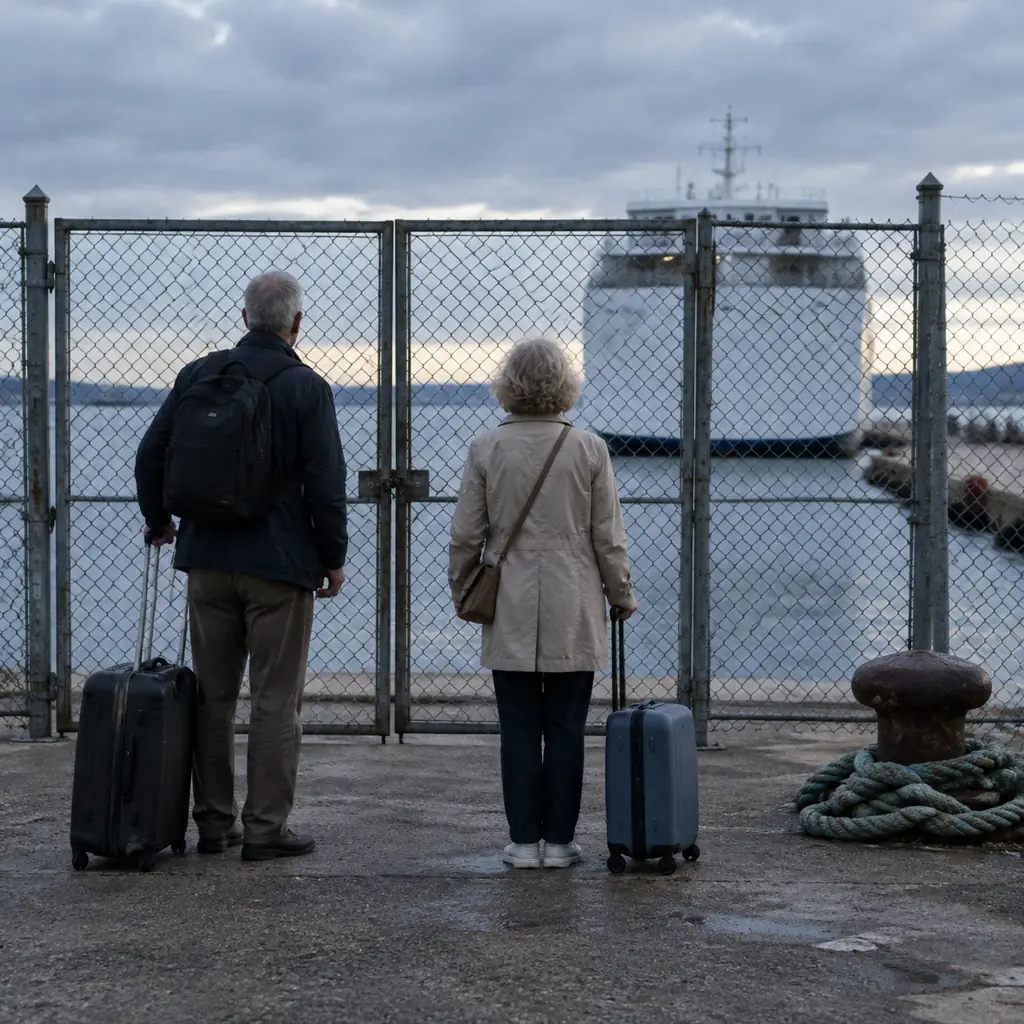
You can reach the pier before the ship leaves and still not sail. Holland America warns that guests who wait to check in at the terminal risk being unable to sail even if they arrive before the vessel leaves. It requires every guest to be checked in at least 90 minutes before the published sailing time, and it asks for online check-in 72 hours ahead.
It is 4:05 p.m. at the terminal curb, the ship sails at 5:00, and check-in closed at 3:30. If you can still join later, the line says you pay all costs to reach the ship at the next port. If you cannot, the cruise is the cost.
Write it down: the cut-off for your sailing, then finish online check-in at least 72 hours out. Other lines set their own times, so find yours.
6. Flying in on the day the ship sails
A same-day flight puts the whole cruise on one airline schedule. If a delay may put you at the port less than two hours before departure, Holland America says its representatives may be able to advise you. That is advice, not a promise. On flights you booked yourself, the line says every expense of joining the ship later is yours, and The Points Guy lists last-minute airfare and possibly a hotel stay.
Suppose your flight lands at 1:50 p.m. for a 5:00 p.m. sailing. Add the border line from #13, the bags and the ride, and the 3:30 p.m. check-in cut-off from #7 is closer than it looks.
Fly in early: arrive the day before and sleep near the terminal. Flying in the same morning is the classic way to miss a ship.
5. Letting your passport run short

Say your passport expires four months after you get home. That passes the EU’s rule of three months beyond your departure, and it fails Holland America’s six months beyond the end of your travel on cruises that end outside the U.S.
Holland America says guests who arrive without complete and accurate documentation may not join the voyage, and that they are not entitled to a refund. A birth certificate with photo ID works only on closed-loop cruises that start and end at the same U.S. port, so a sailing that ends in Europe does not qualify. Azamara’s April 2026 guide adds that a damaged or worn passport, or one with a torn data page, may be rejected.
Do this today: count six months past your last day away. The passport check costs nothing and takes a minute. The last four items on this list are the expensive ones.
4. Buying travel insurance after the waiver window closes

Buy travel insurance a few days too late and the condition you worry about may be the one the policy will not cover. On at least one cruise plan, the clock starts at your first deposit, not at final payment: Tin Leg’s cruise plan waives its pre-existing condition exclusion only if you buy within 14 days of your initial trip deposit.
The booking must be the first and only one for that travel period and destination, you must be medically able to travel, and you must insure 100% of the trip cost. The plan’s look-back period is 180 days, and a condition that stays controlled, with no change in your prescription, does not count as pre-existing.
Conditions that needed hospitalization or direct medical intervention in the 90 days before departure are often excluded, according to the CDC. It adds that in one study insurers fully paid only two-thirds of travelers’ health claims, mainly over preexisting illness and poor documentation.
Before the deposit: read the waiver clause of any policy you consider, and put its deadline on your calendar.
3. Treating the ship's medical center as covered
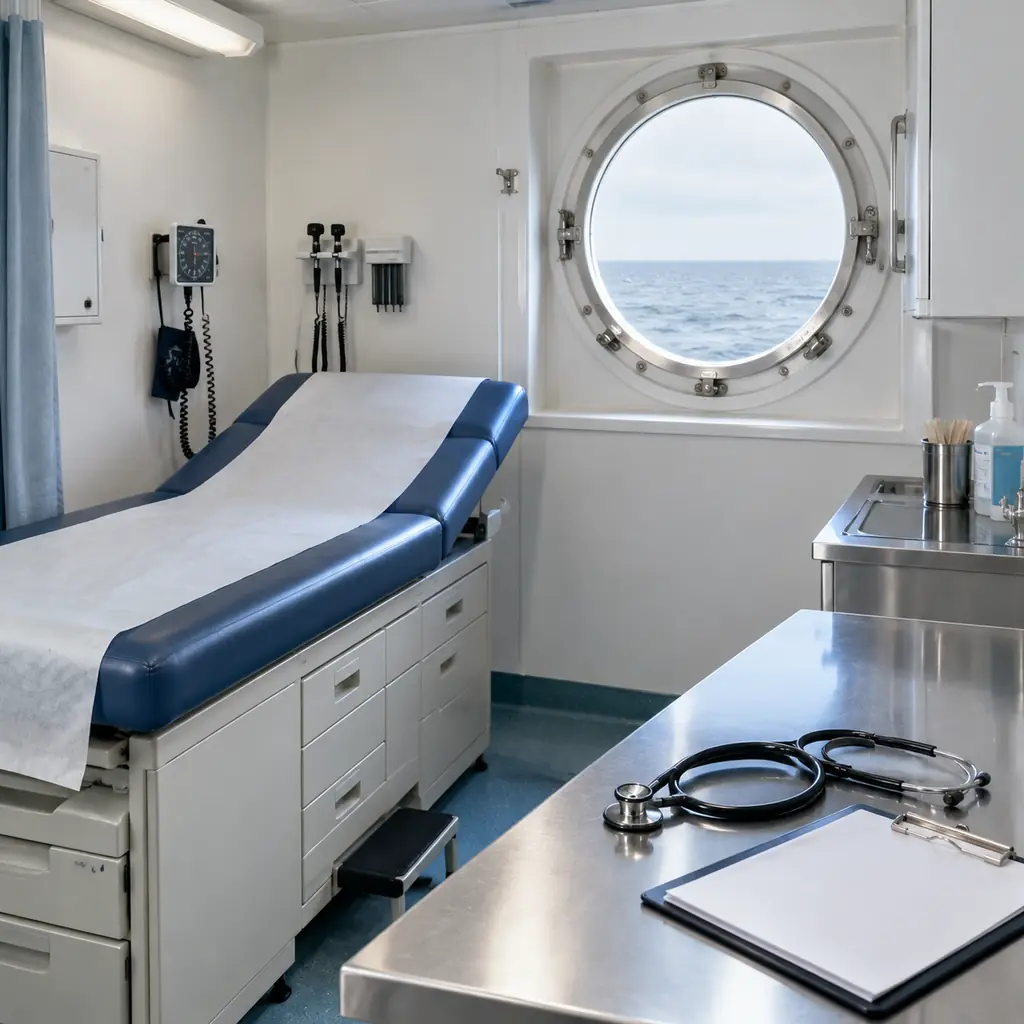
A visit to the ship’s doctor is a separate bill, and on a Mediterranean cruise Medicare will not pay it. Onboard care, meaning the exam, tests and medications, is typically not included in the voyage price, the CDC says, and Holland America says it charges a customary fee.
Medicare’s fact sheet says it may cover care on a cruise ship only if the ship is in a U.S. port or no more than six hours from one. From the Mediterranean, the nearest U.S. port is an ocean away, so that exception never applies.
Who it hits: the CDC says roughly half of the passengers who seek medical care on ships are over 65, and that no government agency officially regulates medical practice aboard cruise ships.
Carry: your plan details, a medication list and a copy of your baseline ECG, which the CDC tells clinicians to give older travelers, especially those with coronary artery disease. The last two items involve the cards in your wallet.
2. Assuming Medicare will pay in a European hospital

Original Medicare will not pay for a hospital stay in Europe. Medicare.gov says Medicare usually does not cover health care while you travel abroad. The fact sheet lists three narrow exceptions, such as an emergency on U.S. soil when a foreign hospital is closer, and none fits a Mediterranean cruise.
Imagine the desk at a foreign hospital asking how you will pay before treatment. Care abroad usually requires a cash or credit card payment at the point of service, the CDC says. Foreign hospitals are not required to file Medicare claims, so you pay the provider in full.
Call your plan: the CDC says Medicare Advantage plans do not usually cover treatment abroad, though some include emergency care. Ask yours whether it pays in a foreign hospital, whether it pays on a ship, and whether it pays up front or reimburses you later. The costliest mistake is next.
1. Counting on your Medicare and Medigap cards to pay for a medical flight home

Medigap’s foreign emergency benefit stops at $50,000 for life, and the CDC says a medical evacuation can cost far more than that. Medicare’s fact sheet says most Medigap plans, including G and N, pay 80% of billed charges for certain emergency care abroad after a $250 yearly deductible. The care must begin in the first 60 days of the trip.
The CDC puts evacuation at $25,000 for transport within North America and more than $250,000 from distant or remote places. The low end is half of the Medigap lifetime limit, and the high end is more than five times it, the biggest bill on this list.
The CDC also says Medicare does not cover medical evacuation, and Holland America says Medicare and many health plans do not cover care at sea, in foreign countries or for air evacuation. The fact sheet’s Medigap section describes emergency care and says nothing about a flight home.
Ask this week: ask your Medigap company, in writing, whether it pays for an air ambulance, and ask a Medicare Advantage plan the same. Then compare travel medical policies that cover evacuation before the deposit window in #4 closes.
Sources (37)
- Medicare.gov: Travel outside the U.S.
- Medicare.gov: Medicare Coverage Outside the United States fact sheet, CMS Product No. 11037, April 2026
- CDC Yellow Book 2026: Travel Insurance, Travel Health Insurance, and Medical Evacuation Insurance
- CDC Yellow Book 2026: Cruise Ship Travel
- CDC Yellow Book 2026: Travelers with Chronic Illnesses
- Holland America Line: Know before you go
- Holland America Line: Beverage packages
- Holland America Line: Beverage package options on board (FAQ)
- Holland America Line: Getting on and off the ship with mobility equipment
- Holland America Line: Tender port list
- Holland America Line: Best time for a Mediterranean cruise
- The Points Guy: What happens if a cruise ship leaves without you (October 2024)
- The Points Guy: What happens if your cruise line changes your itinerary (August 2024)
- Your Mileage May Vary: Will a cruise ship wait for late passengers (March 2026)
- Azamara: EU Entry/Exit System guest guide (April 2026)
- European Commission, Migration and Home Affairs: Entry/Exit System
- European Commission, Migration and Home Affairs: ETIAS
- Your Europe: Travel documents for non-EU nationals
- Euronews: Europe delays the ETIAS travel permit indefinitely (August 2026)
- Euronews: ETIAS scams and launch confusion (updated October 2025)
- Dutchreview: Fake ETIAS websites are targeting travellers (October 2026)
- Frontex: Beware of risks posed by unofficial ETIAS websites (June 2024)
- Vatican Museums: Days and hours of closure
- Vatican Museums: Prices and tickets
- Vatican Museums: Opening and closing calendar 2026 to 2027
- Turismo Roma: Trevi Fountain, new entry fee
- Pompeii Archaeological Park: Timetables and tickets
- Anadolu Agency: Athens Acropolis closed in a heat wave (July 8, 2025)
- Municipal Port Fund of Thira: Cruise arrival and departure evaluation for 2025 and 2026, Decision 182/2024 (September 2024)
- Dubrovnik Port Authority: Cruise Ship Berthing Policy for 2027 (August 2025)
- Dubrovnik Port Authority: Arrivals and departures
- Majorca Daily Bulletin: Palma to cut cruise ship numbers in summer under new deal (February 2026)
- CBS News: Big cruise ships banned from entering central Venice (July 2021)
- AdriaPorts: Venice and Chioggia open the cruise season (March 2026)
- Tin Leg: Pre-existing condition waiver, cruise plan
- Visa: Dynamic currency conversion
- BEUC: Dynamic currency conversion position paper, BEUC-X-2017-118 (October 2017)