
Editor's note: This article is an opinion piece based on publicly available reviews, survey results, company policy pages and industry reporting we found online.
Step ashore at Mykonos in July and you pay €20 (about $23), and your spouse pays €20 more. That is a small change next to what has happened at some of the ports below. These 21 ports run from #21, where your day ashore has slipped least, to #1, where it has slipped most, counting lost ships, lost hours, new fees and heavier crowds, with credit for what still works. The verdicts are the author’s judgment from dated public sources, not a poll of passengers, and the port at #1 is one where the ship no longer arrives the way you may remember.
21. Hawaii: The Cruise Tax a Court Froze on New Year's Eve
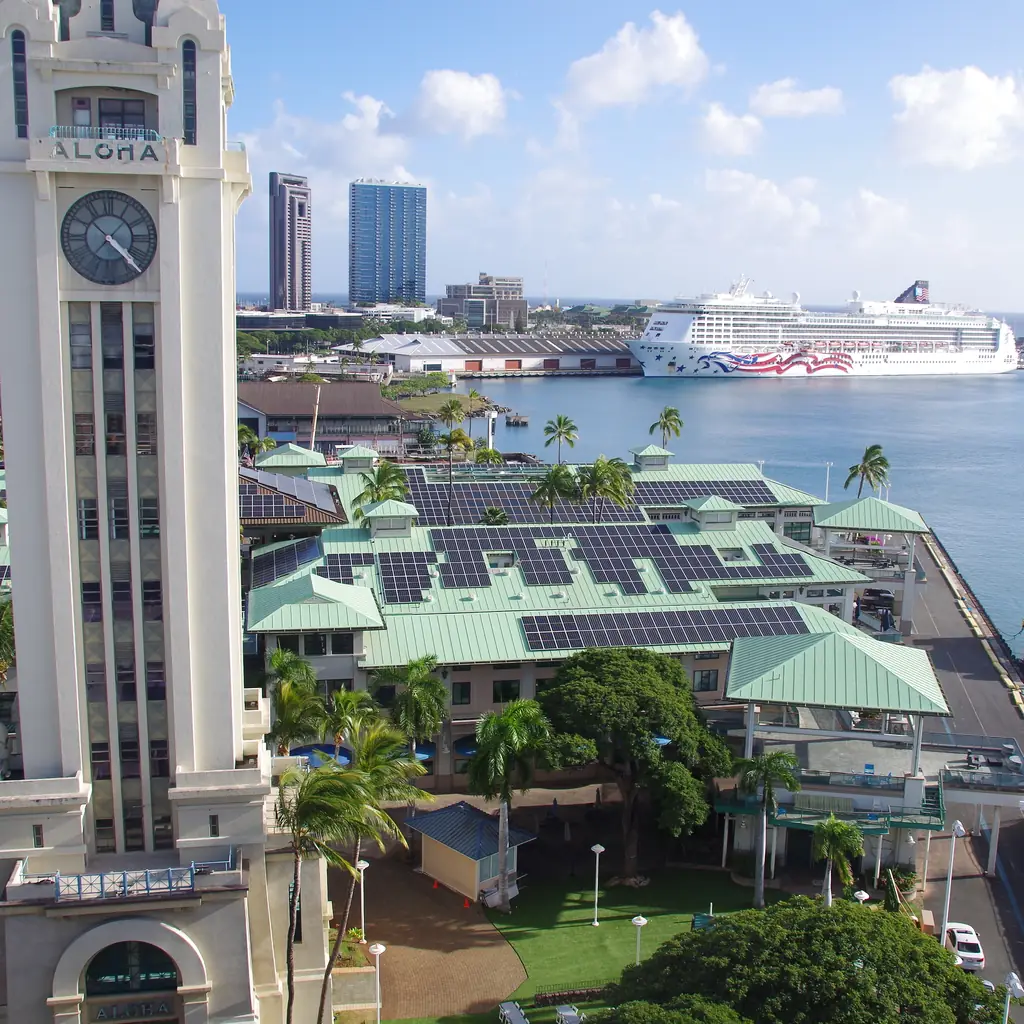
Hawaii has slipped the least because nothing has changed for you yet, and a federal appeals court is the reason. Act 96, signed in May 2025, adds an 11 percent tax on your gross cruise fare, prorated by the days your ship spends in Hawaiian ports. Counties may add 3 percent, which makes 14. On a $3,000 fare for a week spent entirely in Hawaiian ports, you would pay $330, or $420 with the county add-on.
The court blocked the cruise part of the law on New Year’s Eve 2025, the day before it was due to start, Spectrum News reported in an AP story. The state calls the pause temporary. Cruise Hive reported that Norwegian Cruise Line and others had already told booked guests about the fee. The sources reviewed for this page show no ruling on the appeal since then.
Before you book, ask your cruise line whether it will pass a Hawaii tax on to you if the courts let one start.
20. St. Thomas: A Ship Almost Every Day of the Year
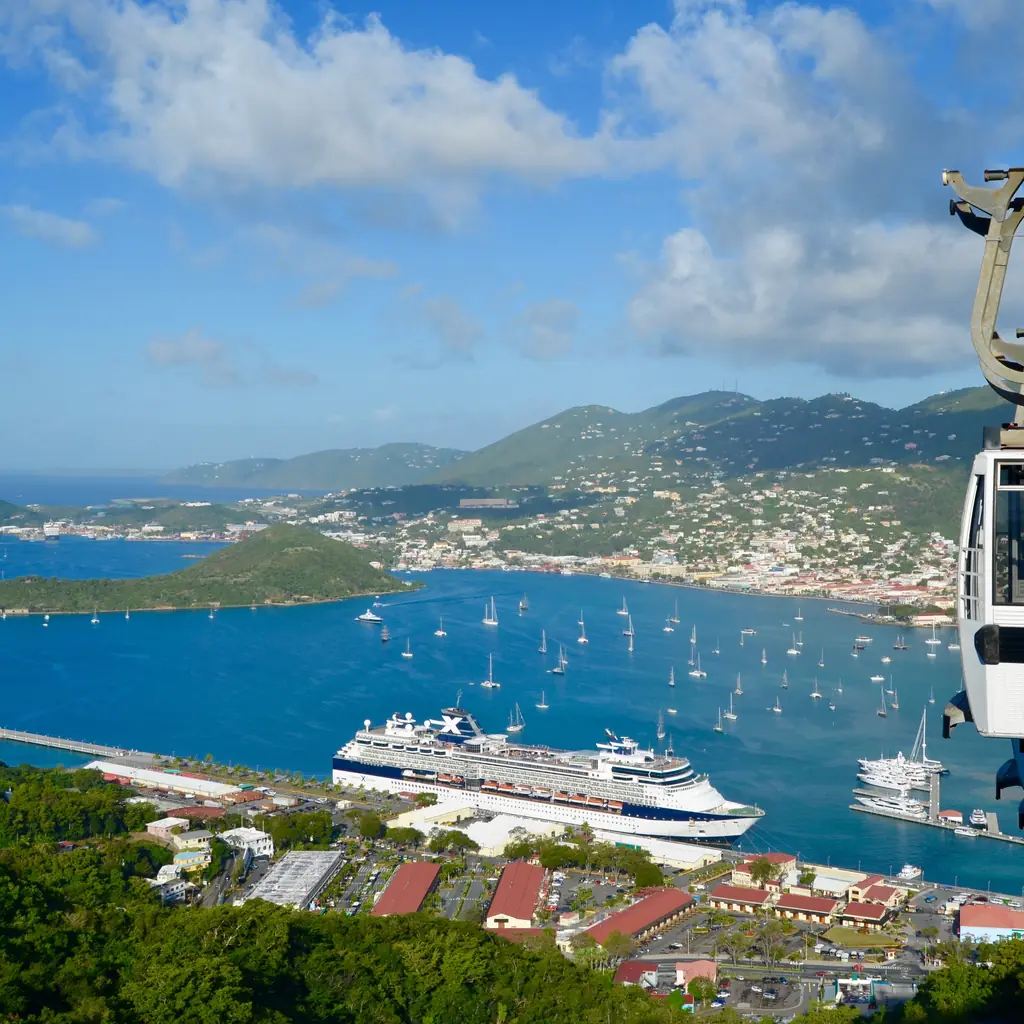
St. Thomas has slipped little, and crowds are the story, not rules. The West Indian Company’s schedule for October 2026 to September 2027 lists 359 ship calls, nearly one a day, and about 1.25 million passengers, Caribbean Journal reported. That is about 3,500 passengers per call, so you share the waterfront with thousands. Ask your line how many other ships will be in on your day.
19. Oslo: A $10-a-Day Cruise Tax on the Council's Table
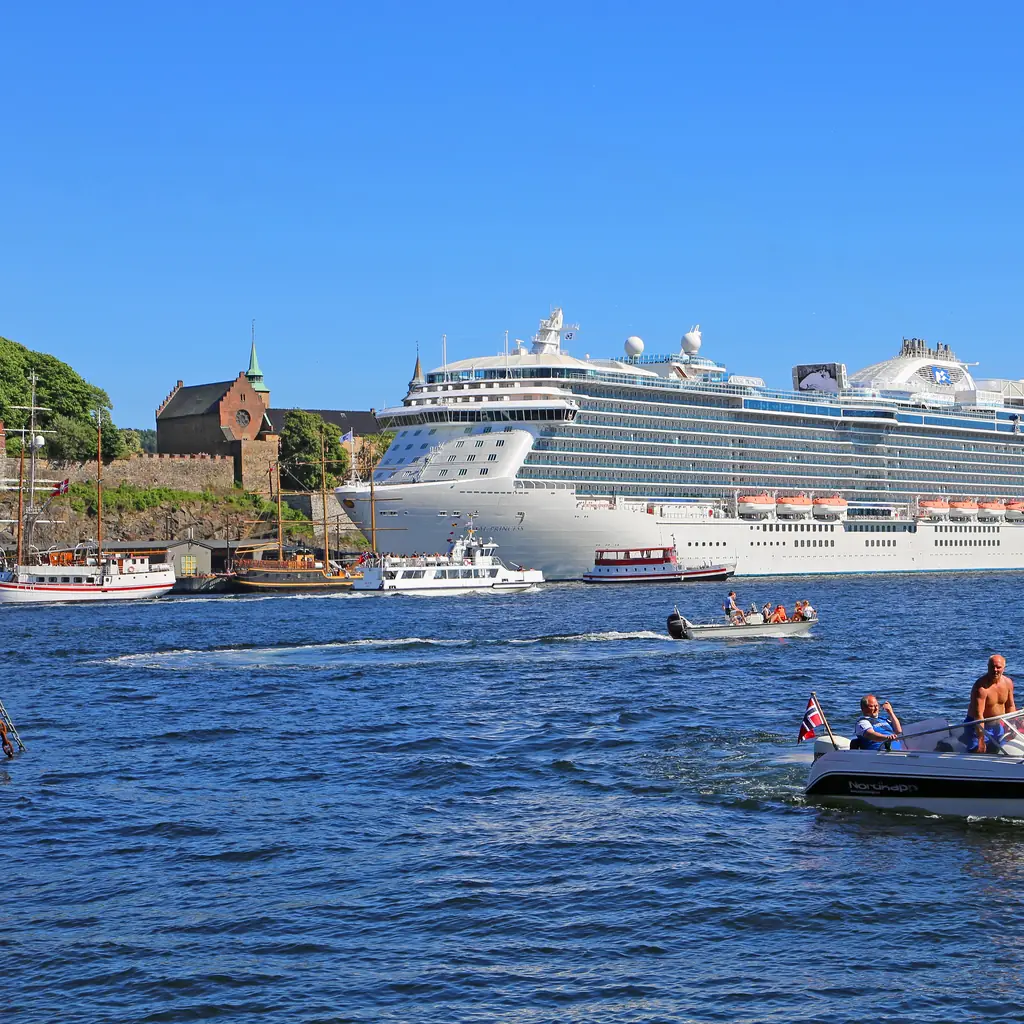
Oslo has charged you nothing yet, so it sits low. The council plans a tax of up to 100 Norwegian kroner, about $10, per passenger for each day a ship is in port, from 2027 if approved. If two of you spend two days in port, you would pay about $40, TravelExtra reported in October 2026.
Iceland, at #3, shows what a per-day charge can do to a port.
18. Nice and Villefranche-sur-Mer: A Ban a Court Stopped
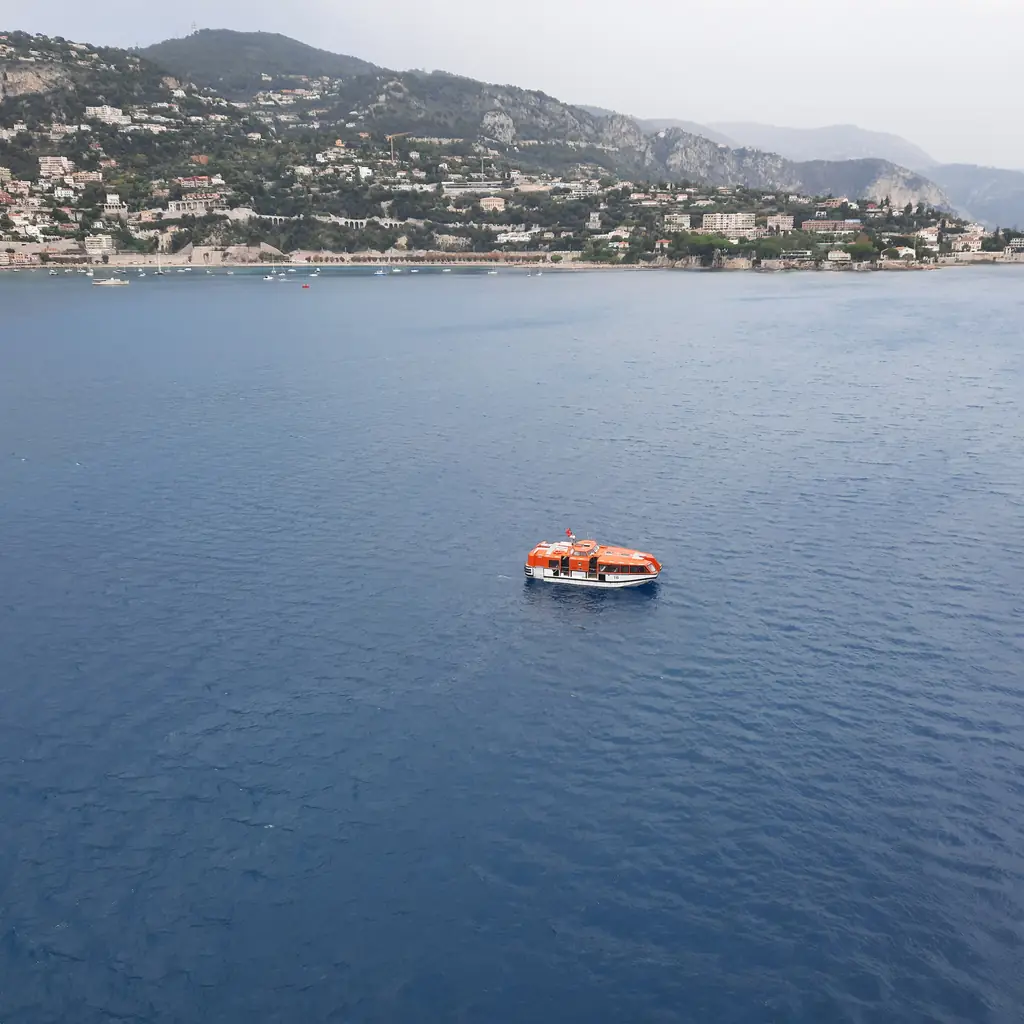
The Riviera’s loudest ban of 2025 did not survive a court, which is why Nice sits this low. In January 2025 Mayor Christian Estrosi signed a decree barring ships above 900 passengers. After pushback from businesses he softened it: Nice would take ships under 450 passengers and Villefranche up to 2,500, one at a time, Connexion France reported. The report put each passenger’s spending at about €70 and the risk to local business at up to €15 million.
Then it turned theatrical. On July 3, 2025, a ship carrying 3,114 passengers anchored at Villefranche anyway, and the mayor went out on a police boat to hand over a letter, the Maritime Executive reported. He was denied boarding.
Days later the Nice administrative court stopped the mayor’s reissued decree. It ruled that such limits belong to the regional prefect, not the mayor, Travelnews reported. The prefect then announced rules on October 10, 2025, phased in from 2026, Cruise Hive reported: ships of more than 1,300 passengers that anchor offshore get one call a day per port, and 15 such calls a month in July and August, except calls booked two years ahead. If a Riviera call is why you booked, ask your line whether it is still firm, and what you get if it is dropped.
17. Athens: The Acropolis Now Costs €30, Even If You Are Over 65

Athens is still worth your day, and the Acropolis is why the day costs more. The full ticket rose from €20 to €30 on April 1, 2025, a 50 percent jump, according to Finestre sull’Arte. You and a spouse now pay €60, about $68.
If you are an American over 65, you pay all of it. The €15 ticket for people 65 and older goes only to Greek and other EU citizens, Paliparan reported. Even if you qualify for free entry, you must reserve a time slot.
The hill also has a crowd limit, and you will feel it in your time slot. The culture ministry’s management body set a ceiling of 20,000 visitors a day, spread over hourly slots from 8 a.m. to 8 p.m., the business paper ot.gr reported in 2023.
Plan around it: Book your slot first on the official ticket site, then fit your all-aboard time around it so you are not racing back.
16. Portland, Maine: The Fee That Climbs to $31
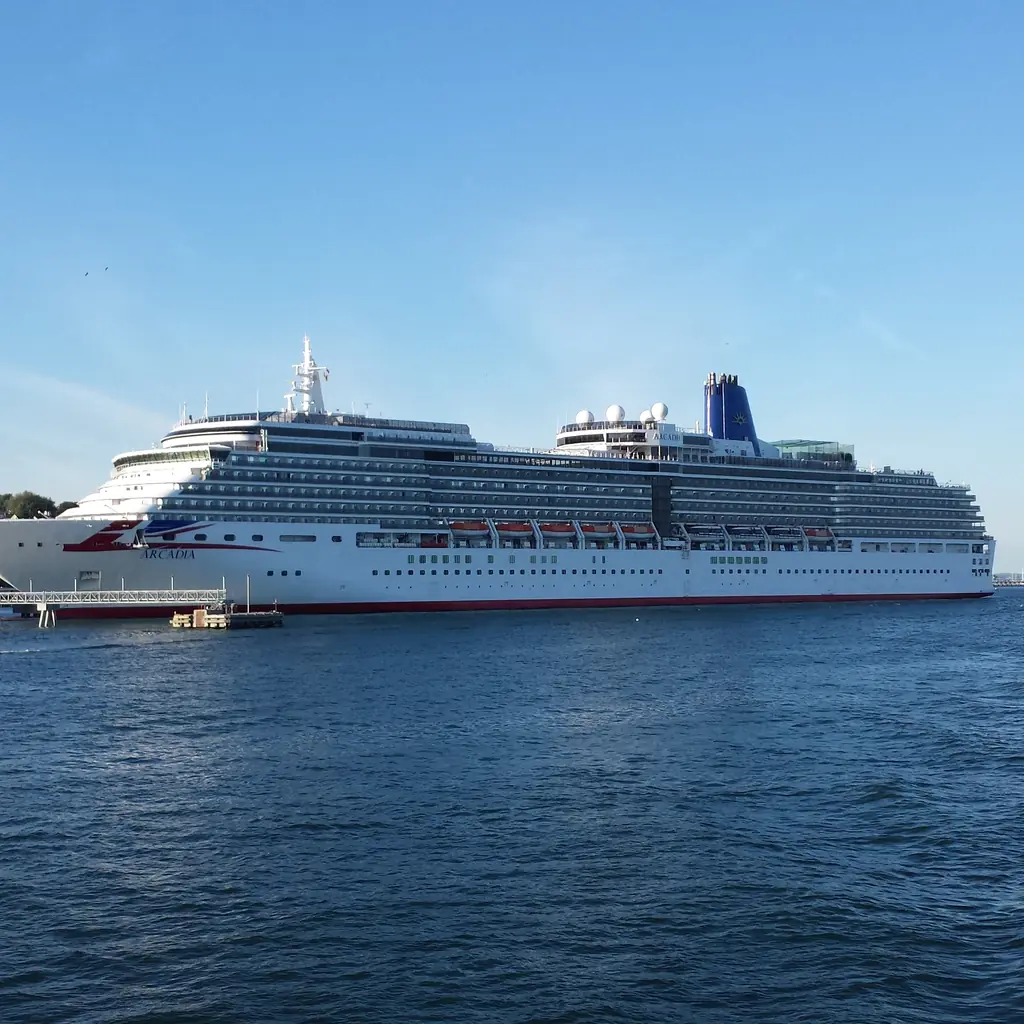
Portland is a mild change on your bill. The city’s charge per cruise passenger is $21 now, rises to $25 in 2027 and reaches $31 by 2030, Come Cruise With Me reported, quoting a city release. Lines typically pass such fees on to you, so a couple pays $20 more by 2030. Look for it in your fare breakdown. In fairness, $3 of today’s $21 is an infrastructure fee for improvements at the city’s two terminals.
15. Ketchikan: The Alaska Port Juneau's Caps Are Filling
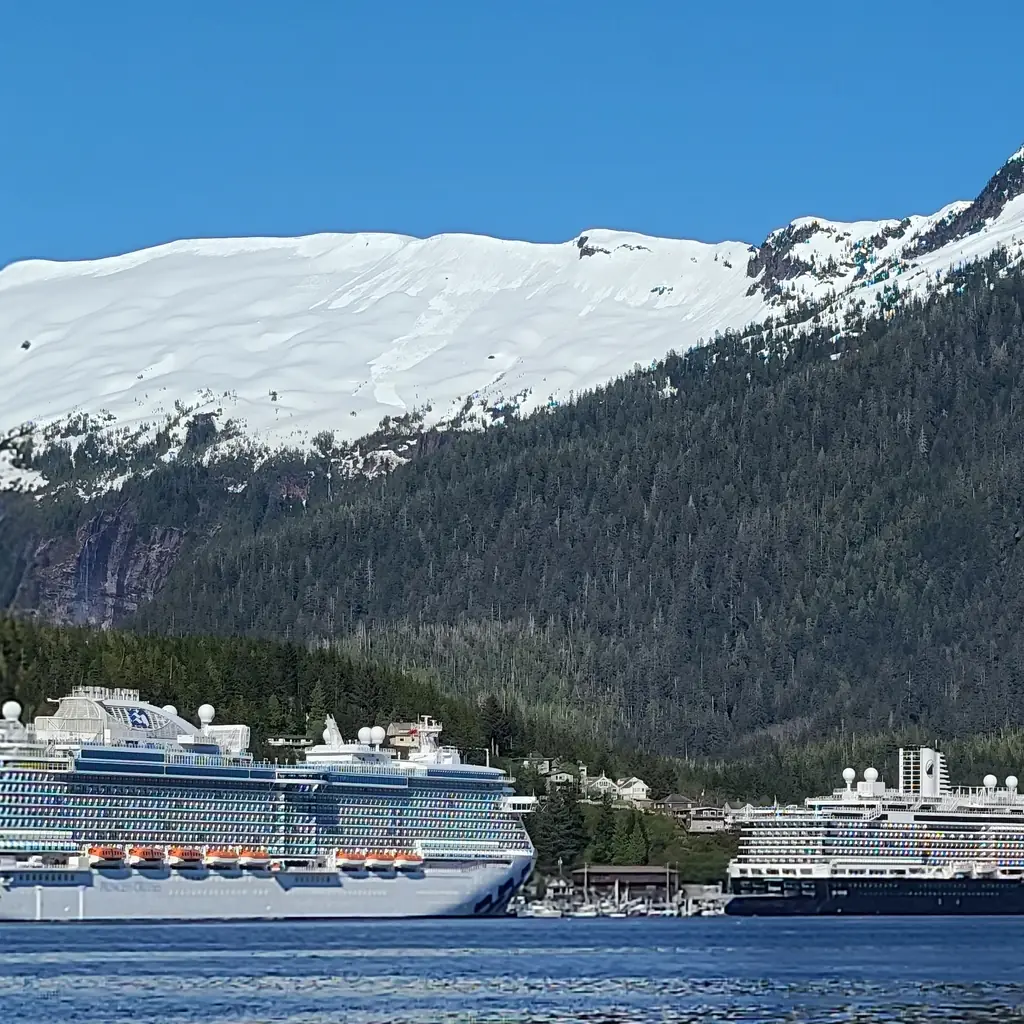
Ketchikan has slipped because of what Juneau did. Juneau’s limits are pushing ships south, and CruiseMapper reported in January 2026 that Ketchikan was projected to pass Juneau in cruise passengers for the first time. Royal Caribbean cut its downtown Juneau calls from four ships in 2025 to three in 2026 and added calls at Ketchikan and Icy Strait Point to keep four ships in Alaska.
That moves a crowd. It does not remove one, so if you picked Ketchikan to get away from Juneau, you may not get away from much.
The credit goes to Ward Cove, a private cruise port north of downtown that opened in 2021 and has redistributed visitor flows. Find out which berth your ship uses, because a berth north of downtown may mean you need a ride, not a stroll. More on Juneau at #8.
14. Nassau: 31,011 Passengers in a Single Day
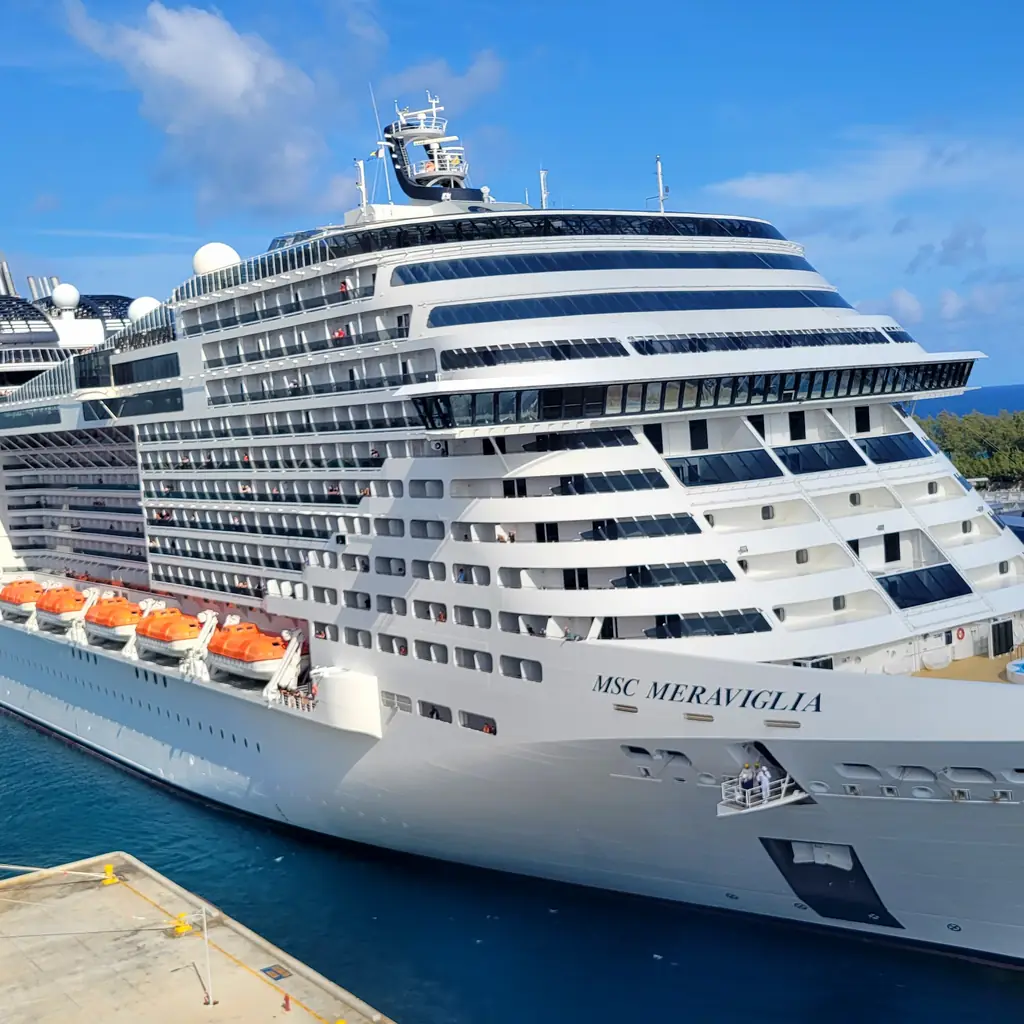
Nassau is the busiest stop on this list, and its own port says so. Nassau Cruise Port counted about 6.1 million passengers in 2025 on nearly 1,600 calls, up 7 percent on 2024, according to its February 2026 release. That works out to roughly 3,800 passengers per ship, and you step off with all of them.
On April 8, 2025, Cruise Hive reported, 31,011 passengers came ashore in one day, topping a record of 30,538 set on six ships in March. Cruise Hive said five-ship days are not rare and six-ship days happen often, so your ship is likely to share the pier.
Cruise Hive said the port has handled six ships at once since a dredging and expansion project in 2022, and the port says a signature restaurant and a day-club pool are due in 2026. Fans of the new waterfront have a point. Your move: On a six-ship day, staying aboard is a real option for you, and Free Cruise Activities Worth Checking Before You Pay for Extras is a good place to start.
13. Cozumel: Nearly Five Ships a Day and a Fee That Keeps Doubling
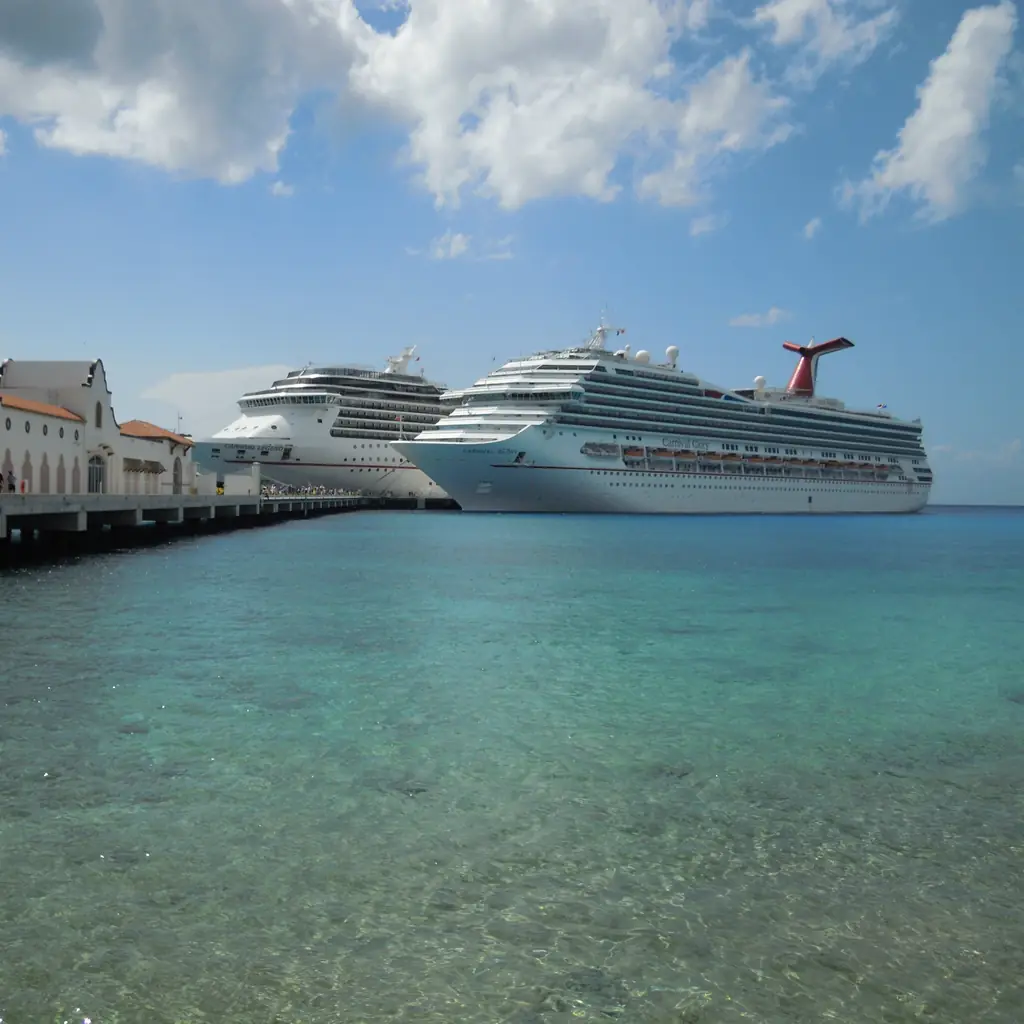
If you cruise Mexico’s Caribbean coast, Cozumel is where you meet the crowds and the new fee together. Mexico’s tourism secretariat counted 1,987,695 cruise passengers and 571 ship calls from January through April 2026, Riviera Maya News reported. Over those 120 days, you would have shared the island with about 16,500 passengers and nearly five ships a day.
Then there is the fee. Mexico doubled its charge on foreign passengers arriving by sea to $10 on August 1, 2026, and the schedule reaches $15 in July 2027 and $21 in August 2028, Riviera Maya News said. By 2028 that is $42 for a couple.
Quintana Roo’s port administrator says Cozumel grew in the first half of 2026 and that worries about its competitiveness have eased. CruiseMapper reported in August that the fee applies once per itinerary, not at each Mexican port, and that lines usually fold it into your taxes and fees. Check that line on your bill, and look for the Mexican charge by name. Another Mexican port, Cabo, comes next.
12. Cabo San Lucas: Every Passenger Rides a Tender, and There Are More of Them
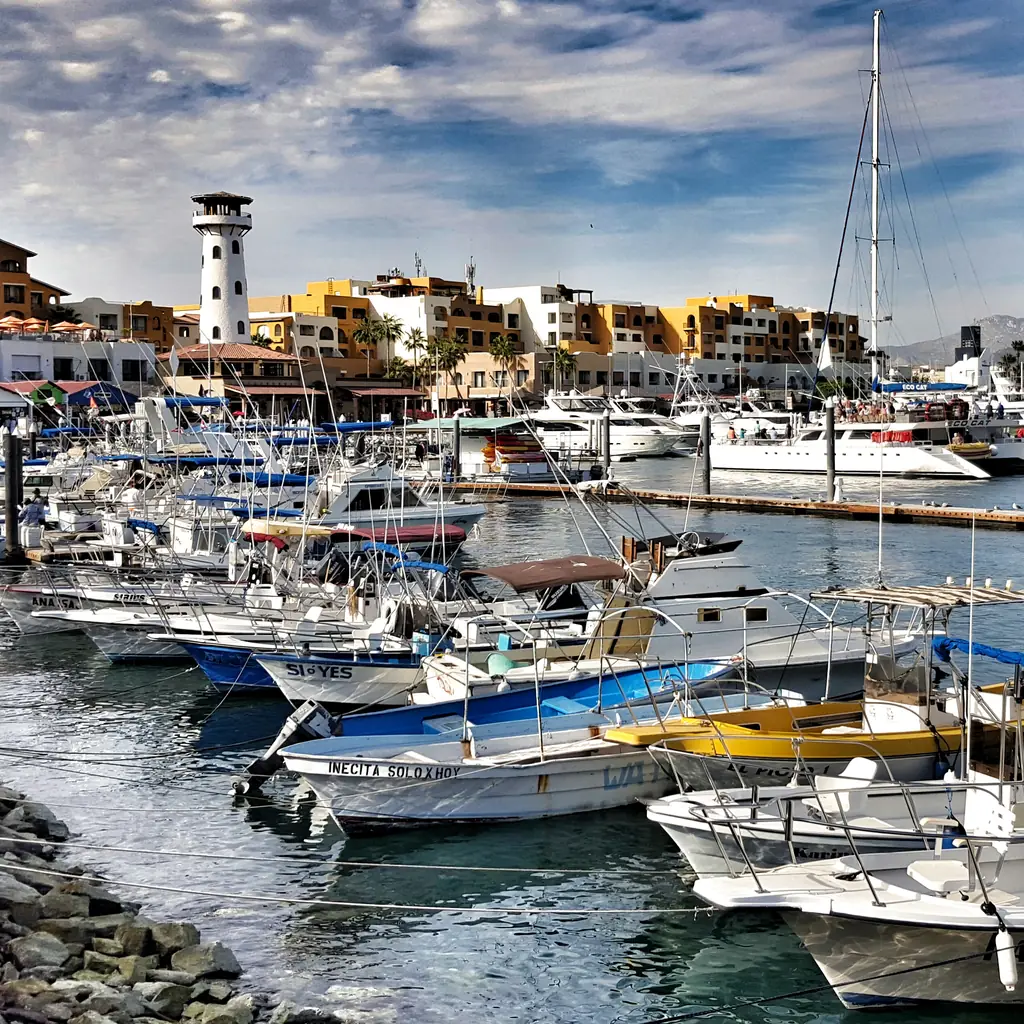
Cabo San Lucas has no deep-water dock, so you ride a tender boat to get ashore, and so does everyone around you. The Cabo Sun, citing official counts, reported 428,799 cruise passengers on 117 ships in the first three months of 2026, up more than 60 percent, with ship arrivals up 62.5 percent. That is about 3,700 passengers per ship, all funneling through the one marina you will use.
The outlet warned that tender lines would be longer and said you might wait an hour for a seat if you leave it late. The Cabo Sun is a local outlet, so treat the exact percentages with care. The direction is clear.
Better move: Take an early tender, and be at the dock well before the last one back. If this is your first cruise, First-Cruise Mistakes That Can Spoil a Good Vacation is worth reading before you book.
11. Ibiza: The Ships Come in at Lunchtime
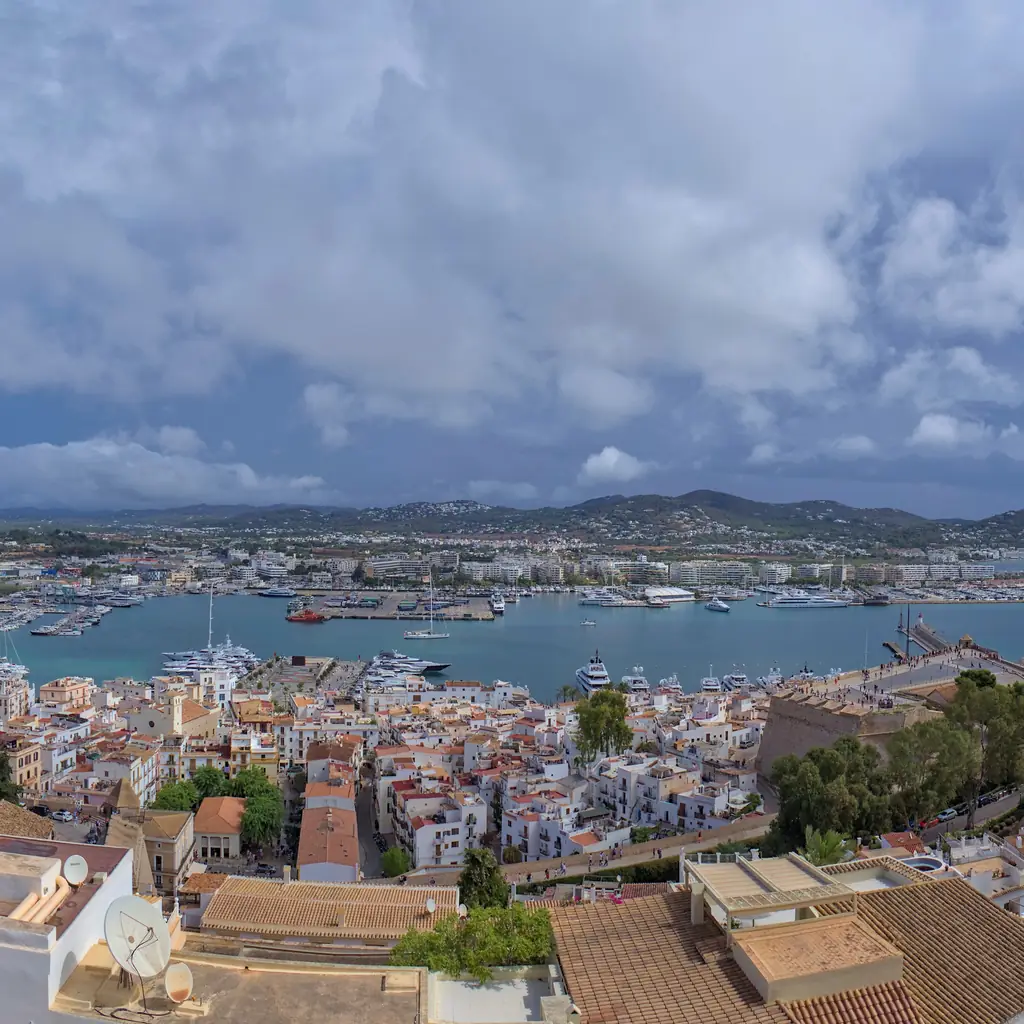
Ibiza’s cruise day starts later than you might guess. The Balearic Port Authority’s 2026 plan, which lists 205 calls, says cruise ships enter the port from 11:30 a.m. onward, with authorized exceptions. It also schedules arrivals so that landings stay under 3,000 passengers an hour, which keeps the terminal, the buses and the taxis from overloading.
Most days the port gets one or two ships, and three only on specific days. Fewer ships at once is a fair goal, and it may spare you a long queue. The cost is time, because a late arrival shrinks your day ashore.
What it means: Treat Ibiza as an afternoon port, and ask your line when you can leave the ship, so you do not plan a morning you will not get. Spain’s other island port is at #9.
10. Mykonos: A €20 Charge to Step Ashore
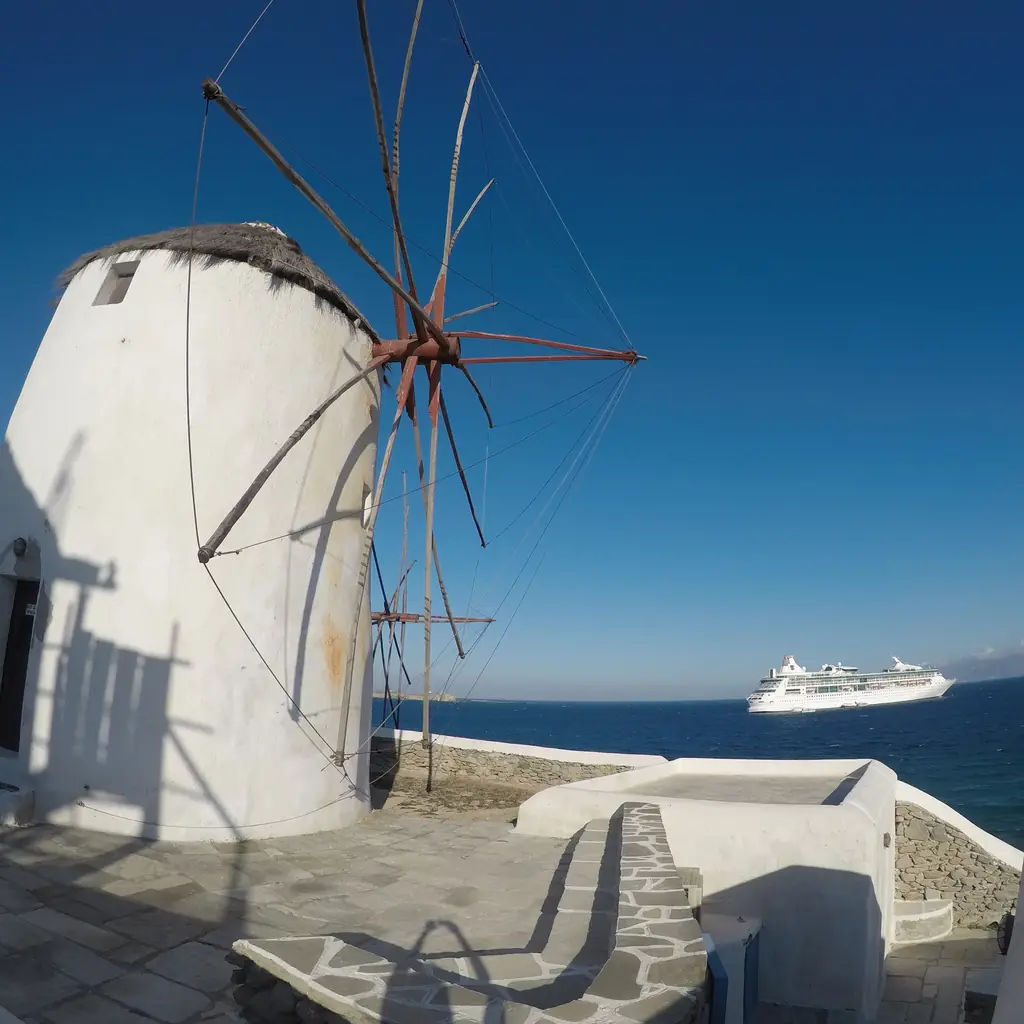
Mykonos now charges you to land. Since July 21, 2025, Greece has levied €20 per passenger at Mykonos and Santorini from June 1 to September 30, and €5 at its other island ports, Travel Weekly Australia reported. You and a spouse pay €40, about $46, at Mykonos alone. A summer week that adds Santorini and a €5 stop costs each of you €45.
The crowds did not take the hint. Greek City Times says Mykonos traffic grew 16 to 17 percent despite the levy, and argues that €20 on a €4,000 fare is 0.5 percent, too small to change anyone’s plans. Lines and agents pay the fee into a Greek digital platform, so ask your line how it shows up on your bill. For more on stretching the money, see Cruise Tips That Make Your Vacation Money Go Further.
9. Palma de Mallorca: Voluntary Limits You Still Feel
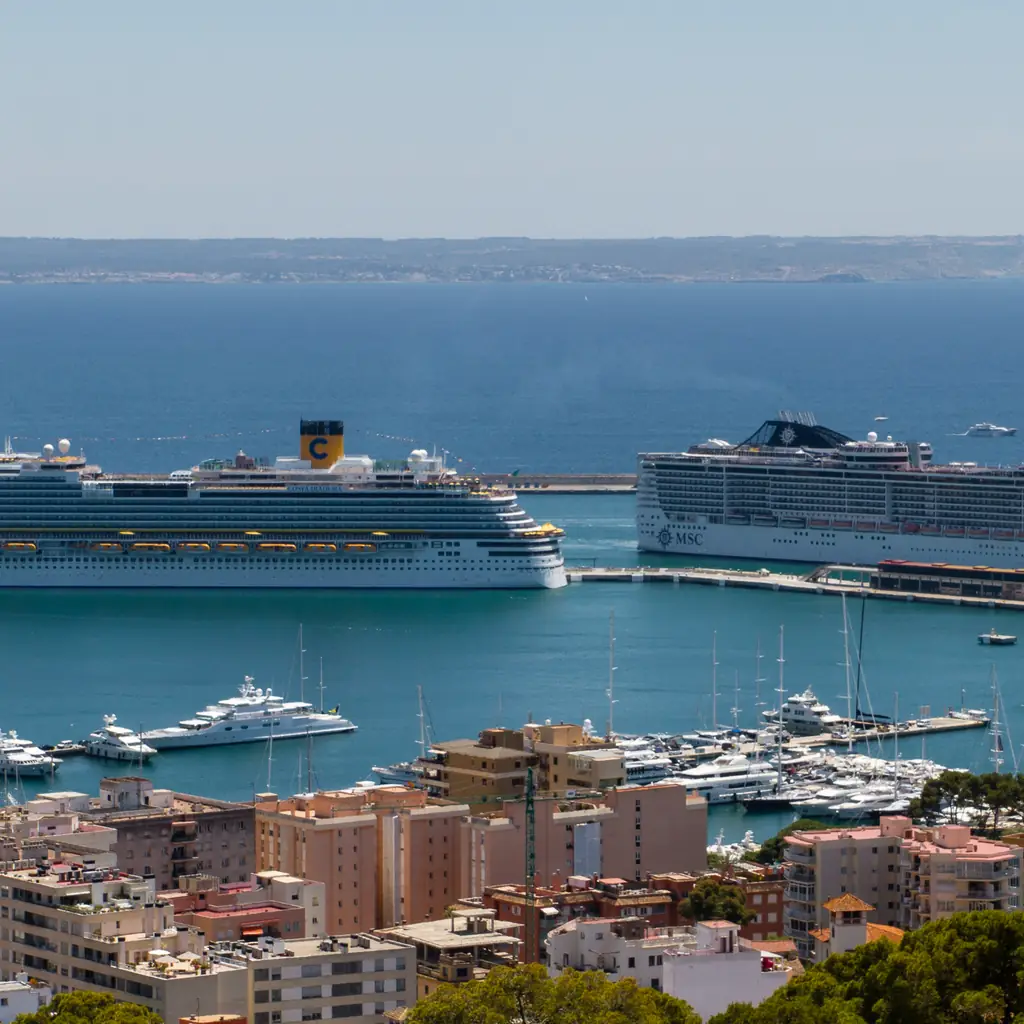
Palma’s limits are voluntary, and they still reach you. A renewed agreement between the Balearic government, Palma’s city hall and the cruise association CLIA keeps three ships a day. It trims the summer ceiling for 2027 to 2029 from 8,500 passengers a day to 7,500, the Majorca Daily Bulletin reported. That is about 30,000 fewer passengers a month in the main season.
CLIA’s Spain director said some stopover requests will have to change, so if you sail in 2027 or later, your ship’s day may move. CLIA also says cruise activity in Palma is already 15 to 16 percent below pre-pandemic levels, and it argues that cutting only cruise traffic will barely change what residents feel. That is a fair point, though it does not help you if your port day moves.
For more Mediterranean numbers, see The Mediterranean Cruise Mistakes That Cost Travelers the Most in 2027. Barcelona, at #7, took a harder line.
8. Juneau: A Cap of 16,000 a Day Is Still 16,000
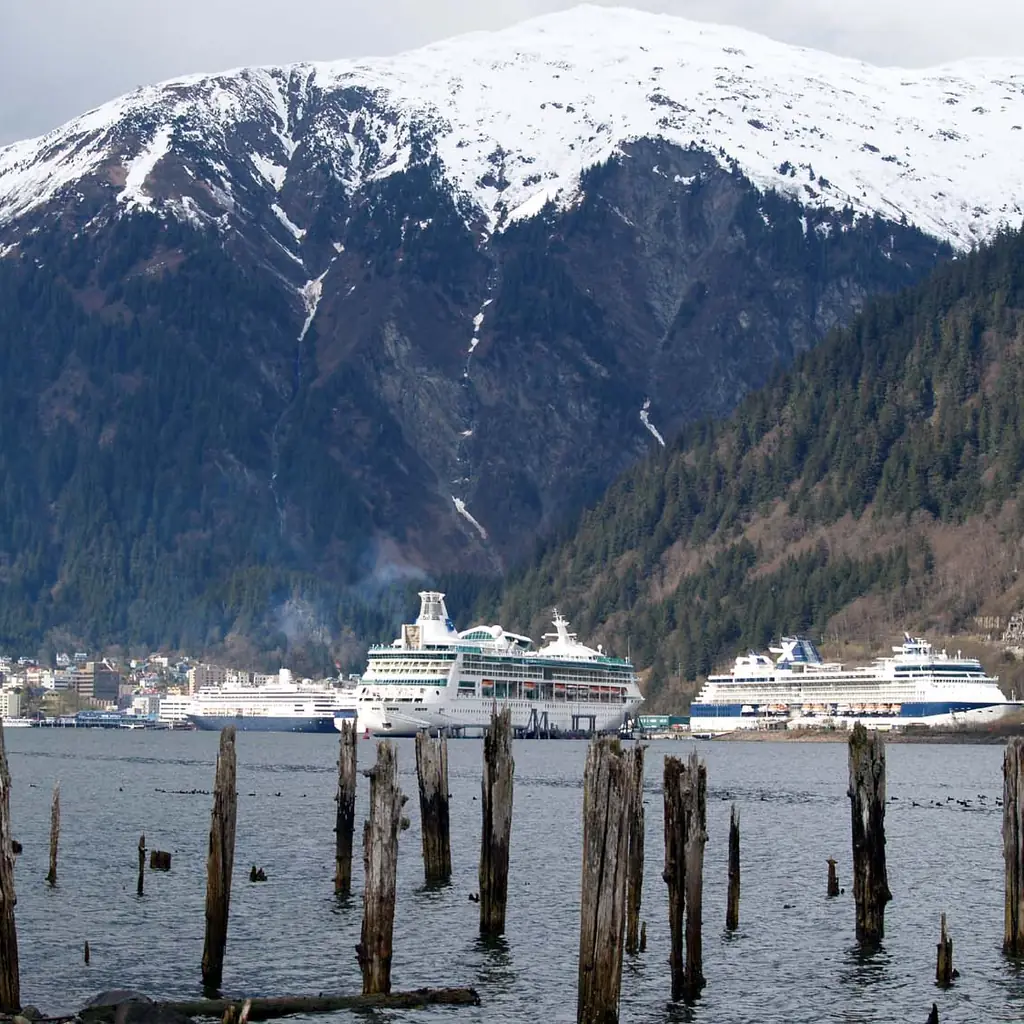
Juneau is capped, and you will still find it one of the busiest ports in Alaska. The city and CLIA agreed to a limit of 16,000 passengers a day, 12,000 on Saturdays, beginning in 2026, on top of a five-ship limit in place since 2024, the Juneau Empire reported. The deal is voluntary. Tourism director Alexandra Pierce can approve a bigger day case by case, though she said her goal for 2026 was to approve none.
The cap exists because peak days ran a few thousand past 16,000, Pierce said. Even so, Juneau is expected to stay near its record 1.69 million passengers of 2025, per CruiseMapper’s January report.
Sixteen thousand is a ceiling, not a promise. On a busy day you can still share downtown with that many other passengers, and a Saturday call has the lowest limit of the week. If you are weighing a cabin upgrade for Alaska, read What an Alaska Cruise Upgrade Changes That a Caribbean One Doesn’t first.
7. Barcelona: Smaller Port, Bigger Tax
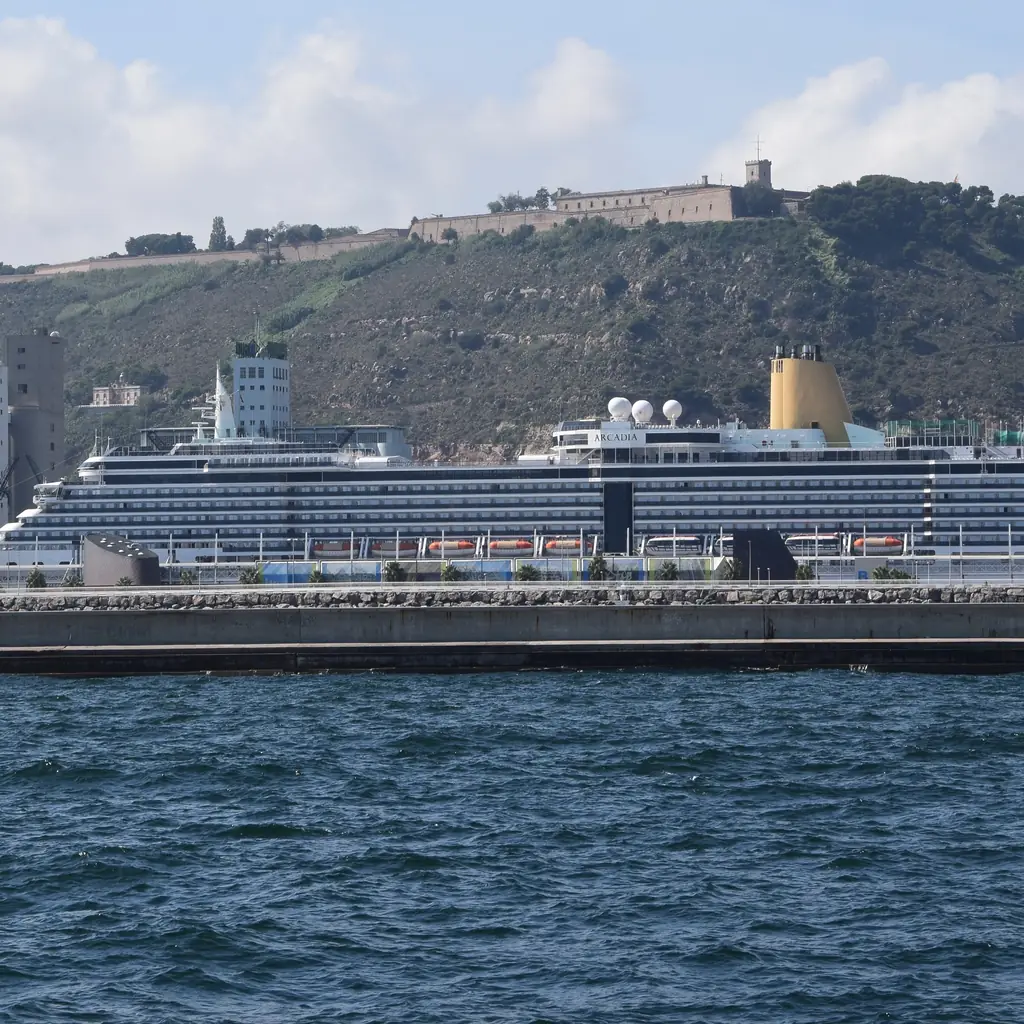
Barcelona is rebuilding its cruise port smaller and raising what a short visit costs you. A July 2025 deal between the city and the port will cut cruise terminals from seven to five by 2030 and lower the maximum daily capacity from 37,000 to 31,000 passengers, the Maritime Executive reported. In May 2026 Mayor Jaume Collboni said he wants only ships that start their cruise in Barcelona to dock there within a few years, Ara reported.
The price is moving too. On September 25, 2026, the city council gave initial approval to raise the municipal tax on cruise passengers who spend less than 12 hours in the city from €5 to €12 in 2027, then by €4 a year to the legal maximum of €24 in 2030, Catalan News and Ara reported. Add Catalonia’s €6 regional fee, Cruise Hive said, and a couple pays €36, about $41, in 2027 and €60, about $68, from 2030. Final approval was still pending in mid-November 2026.
You are exempt if you start or end your cruise in Barcelona. If Barcelona is your embarkation port, read Cruise Boarding-Day Mistakes That Can Spoil the Start of Your Trip.
6. Cannes: Fewer Big Ships, and Tenders for All of Them
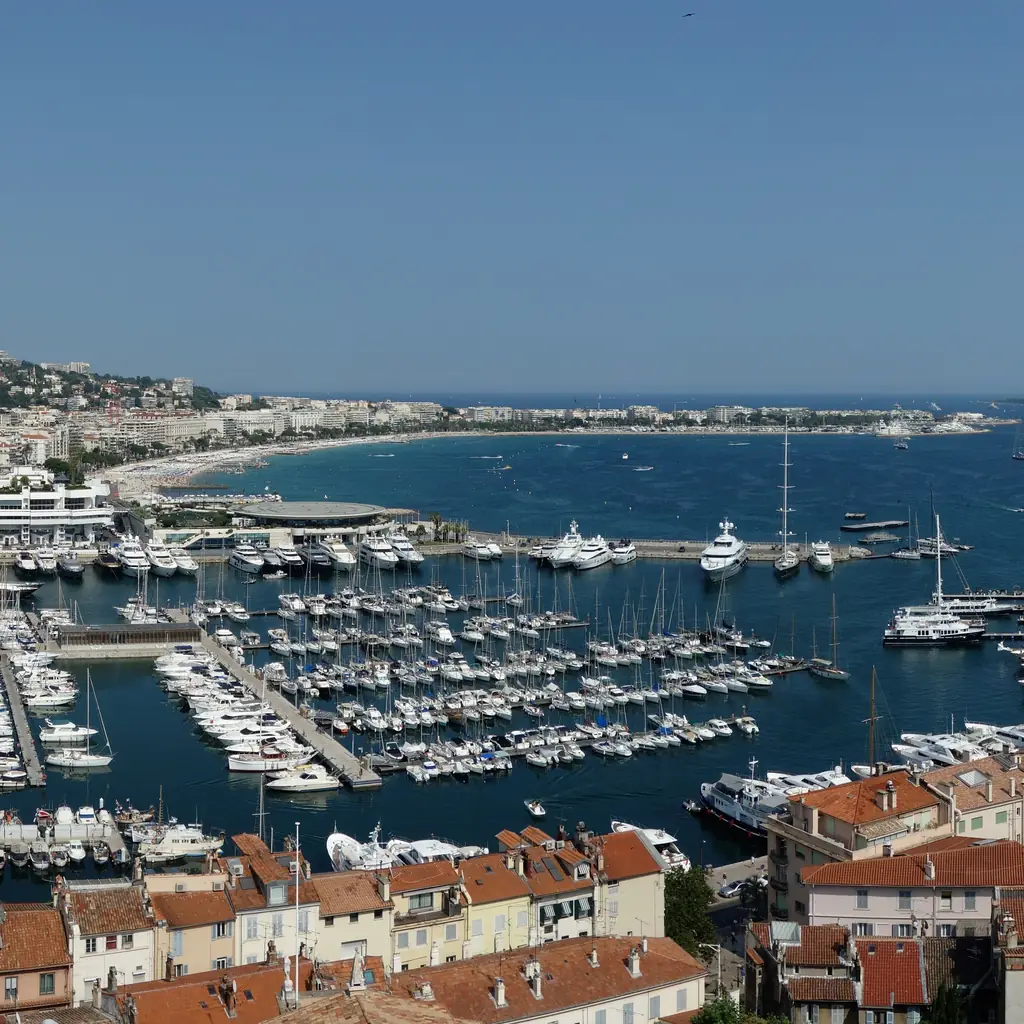
Cannes keeps the Riviera but not the big ships, so if you sail on one, your ship may call less often or not at all. In June 2025 the city council announced that ships above 3,000 passengers may anchor only once a day, that total cruise passengers are capped at 6,000 a day, and that large-ship arrivals would fall by almost half, to 34 in 2026 and 31 in 2027, Keystone-SDA reported. CruiseMapper added that from January 1, 2026, ships carrying more than 1,000 passengers cannot dock directly in the harbor.
Around 2030 only ships of up to 1,300 passengers would be allowed. In 2024 Cannes saw 175 arrivals and about 460,000 passengers.
The town has no port for big ships, so they anchor about 300 meters offshore and you ride a tender in. CLIA called the limits unjustified. If a Riviera call is why you booked, ask whether Cannes is still on the schedule and whether your ship will tender.
Read more: Why Some Passengers Feel These Cruise Lines Have Gone Downhill
5. Santorini: The Day You Booked May Not Be the Day You Get
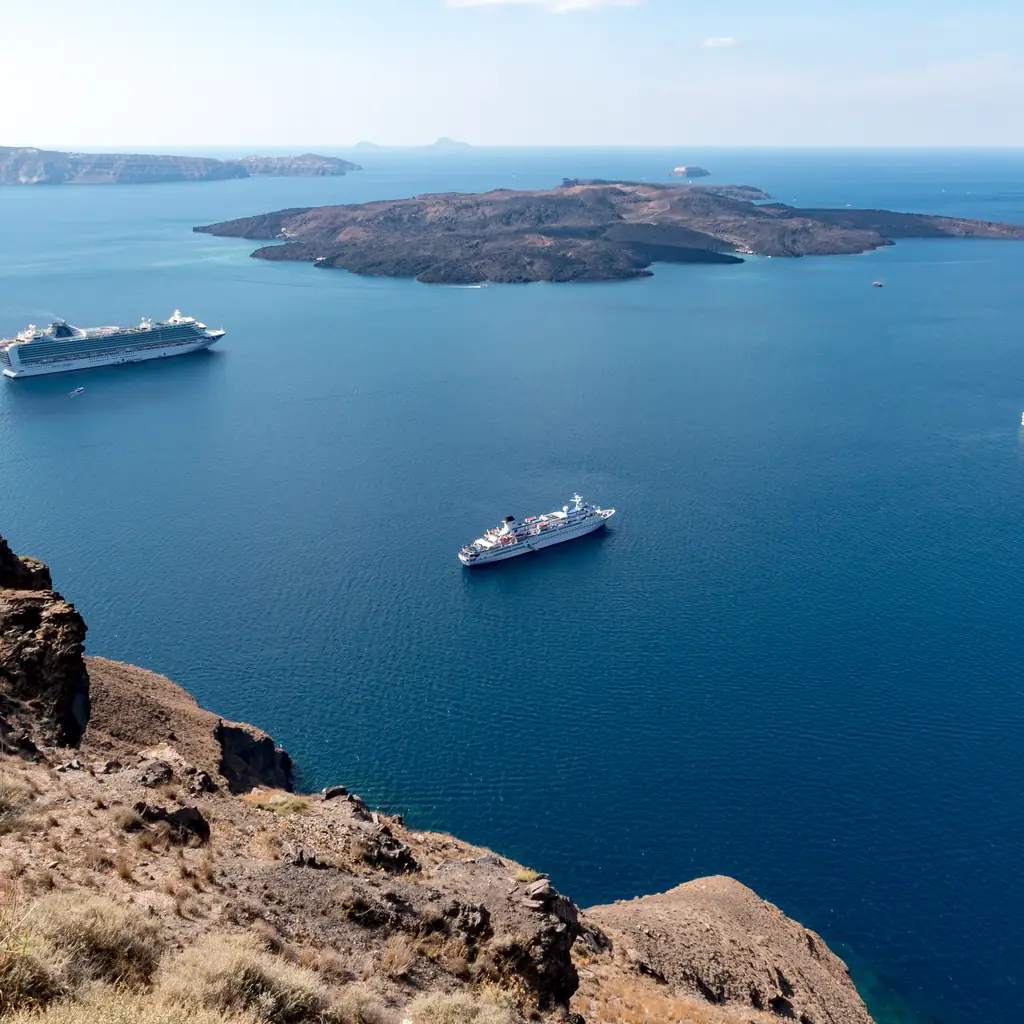
Santorini slipped because its cap is now strict, and you feel it in the schedule. The port’s own 2025 to 2026 policy sets a limit of 8,000 cruise passengers a day, and for 2026 it counts every ship at 100 percent of its capacity instead of 80. So a ship with 3,000 berths takes 3,000 slots, not 2,400, and fewer than three such ships fit in a day.
Greek City Times reported 595 scheduled calls, against 728 in 2025, a drop of about 18 percent. When a day would overshoot, calls that rank lower move to other dates, so your booked day may not hold.
Add the €20 landing fee and the island costs you more for less choice. The cap does what it was built to do: the same report says some days had reached 11,000 to 17,000 people before it. If Santorini is why you chose a Greek route, confirm the call before you pay, and see Cruise Packages and Routes That Aren’t Always Worth the Hype. A city that may lose its terminal altogether is at #4.
4. Amsterdam: A Terminal That May Close for Ocean Ships
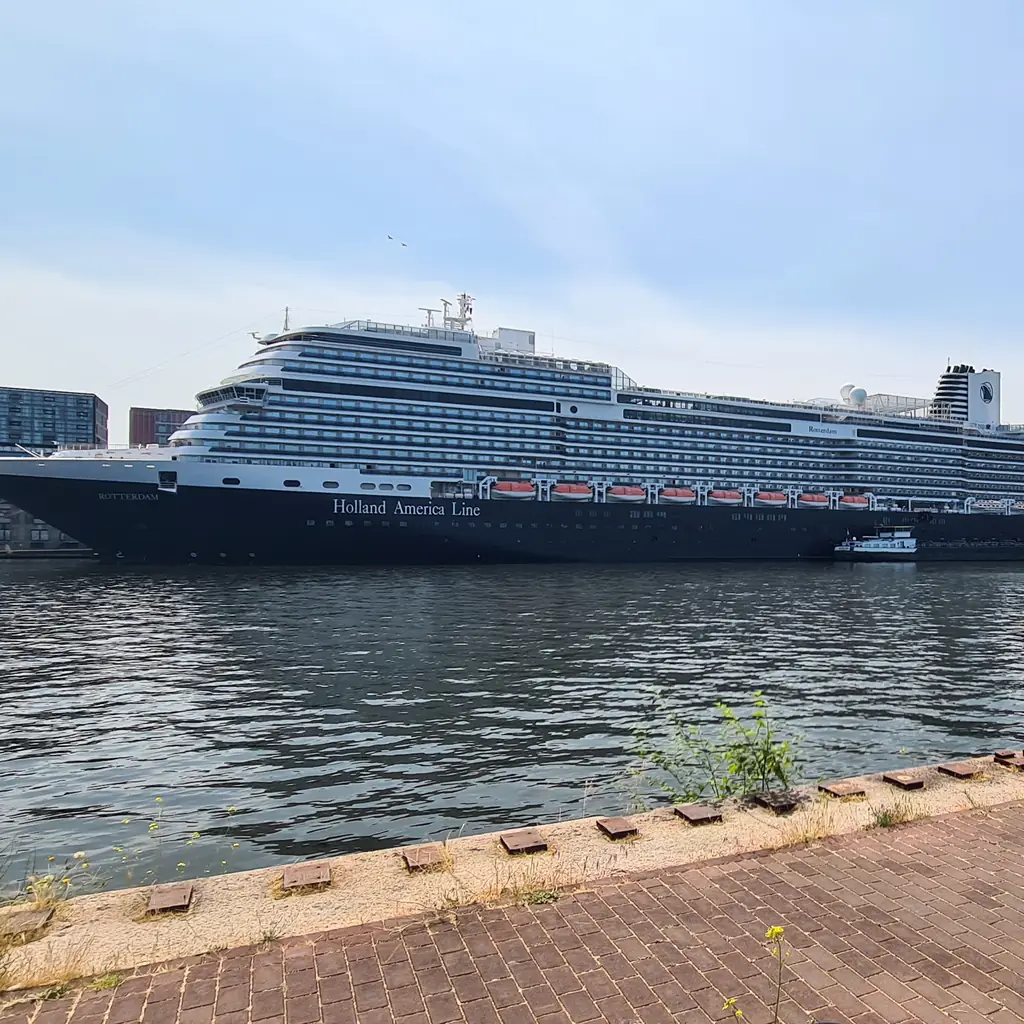
If Amsterdam is on your 2027 list, know that the city may lose its ocean cruise terminal altogether. In 2024 the city council decided to cut ship calls from 190 to 100 by 2026 and to remove the terminal from the center by 2035. In January 2026 officials chose not to vote on moving it, because relocation would cost more than €85 million. They said they would explore ending ocean cruises by 2035 and leave the decision to the city government elected on March 18, Cruise Industry News reported.
That government now exists, and it still wants the terminal gone. Its June 2026 plan, DutchNews reported, repeats the aim of closing the terminal east of the main railway station to stop sea cruise ships visiting. The sources reviewed here do not say when. Amsterdam still welcomes more than 300,000 cruise passengers a year, according to Islands. Ask first: Is Amsterdam a firm stop on any sailing you book for 2027 or later, and what will your line do for you if it is dropped?
Read more: Which River Cruises Are Worth Every Dollar, and Which to Skip
3. Iceland: A Daily Charge and Disappearing Calls
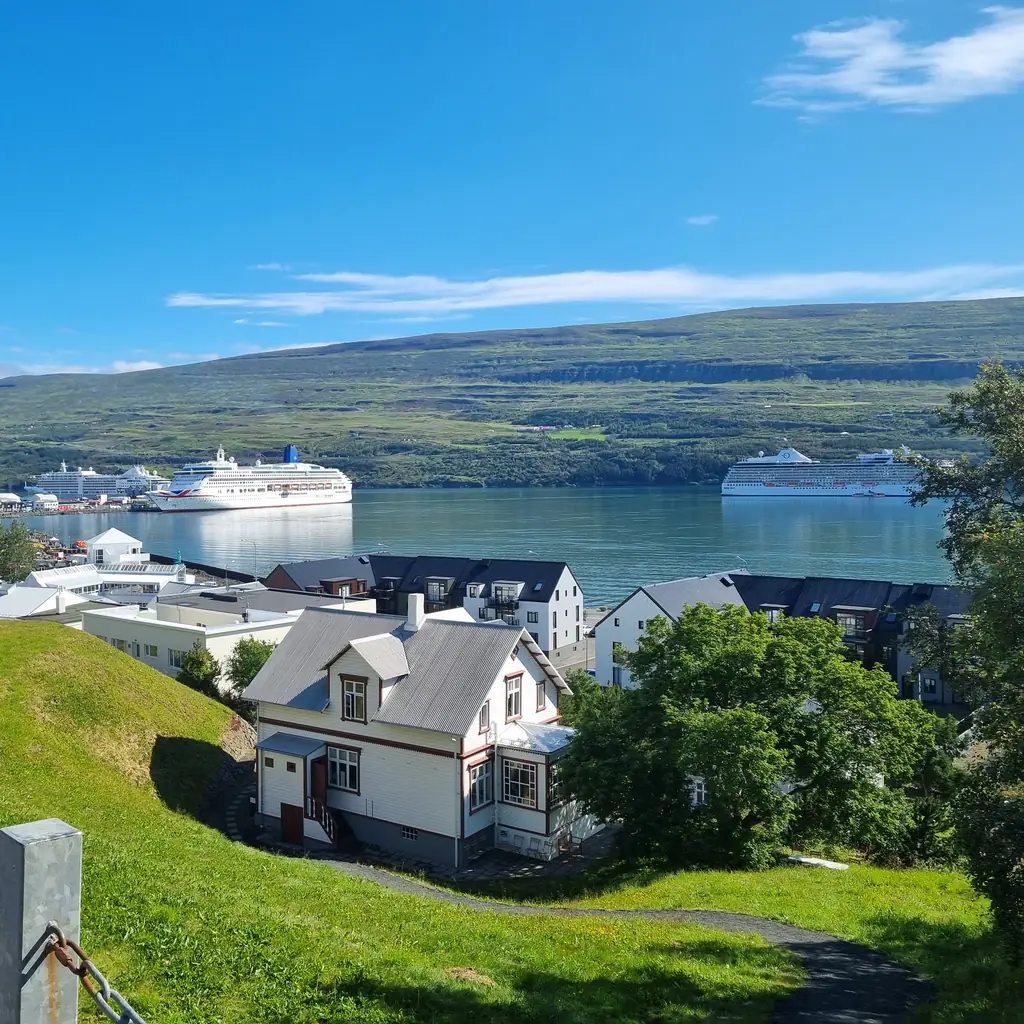
Iceland shows what a per-day charge can do to a port, and to your itinerary. A fee of 2,500 Icelandic krona, about $18, per passenger per day took effect on January 1, 2025, whether or not you go ashore, Cruise Industry News reported. For 2026 the rate was cut to 1,600 krona, about $12, per passenger for each started day in Icelandic waters, according to Iceland’s tax authority, Skatturinn. On a week that spends every day in Icelandic waters, you would pay about $80.
The industry group Cruise Iceland told the Maritime Executive in October 2025 that bookings had collapsed. It projected ship arrivals down 17 percent in 2026 and 37 percent in 2027 from the 2024 record of 1,248 visits, which would be about 790 visits in 2027. Akureyri was set to lose 44 ships in 2025, Iceland Review reported.
The cut began as a parliamentary committee proposal in December 2025, Húsavík.com said, while noting that the schedule for 2026 had already thinned by then. Iceland still has everything it always had. It just has fewer ships, so if it is on your list, ask whether your call is firm before you build your trip around it.
2. Bar Harbor: A Town That Voted Ships Away
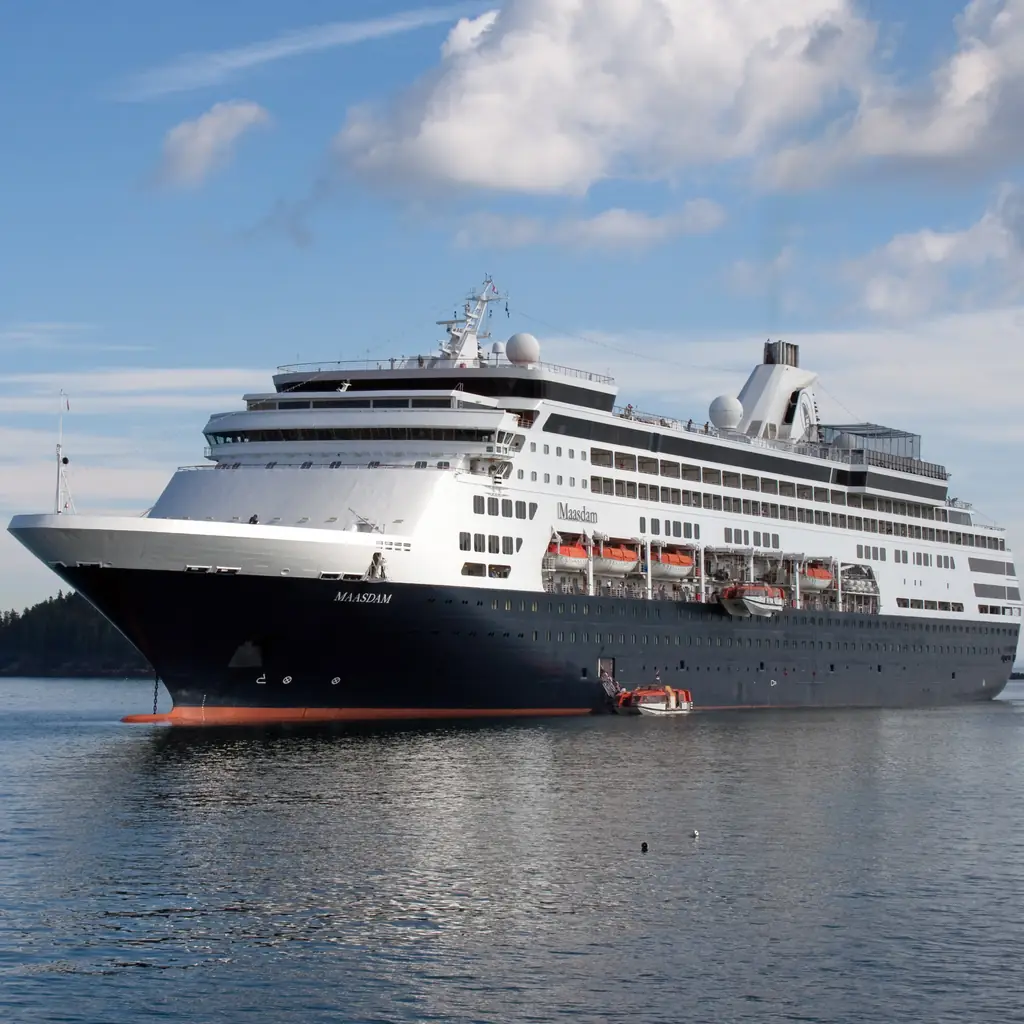
Bar Harbor is the clearest U.S. case of a town that voted ships away, then had a judge hand some back. Voters passed a cap of 1,000 cruise passengers a day in November 2022, by 1,780 to 1,273. Before the cap the town saw more than 100 ships a season, and visits fell as pre-cap bookings ran out. The 2026 maximum is just under 50,000 passengers, the Bangor Daily News reported.
On May 15, 2026, Judge Lance Walker ruled the cap unconstitutional and unenforceable in every month but July and August. Charles Sidman, who joined the case in defense of the cap, has since appealed, Bar Harbor Story reported. In June the town manager said the town had not decided on an appeal and would take no new advance cruise reservations for now, the Bangor Daily News reported.
The ruling helps the shops that wanted ships and costs residents some of the quiet they voted for. You land in the middle. If you book Bar Harbor, ask your line to confirm any call outside July and August, because your date may not survive. One port changed the ships themselves, and that is #1.
1. Venice: The Famous Approach Is Closed to Most Ships
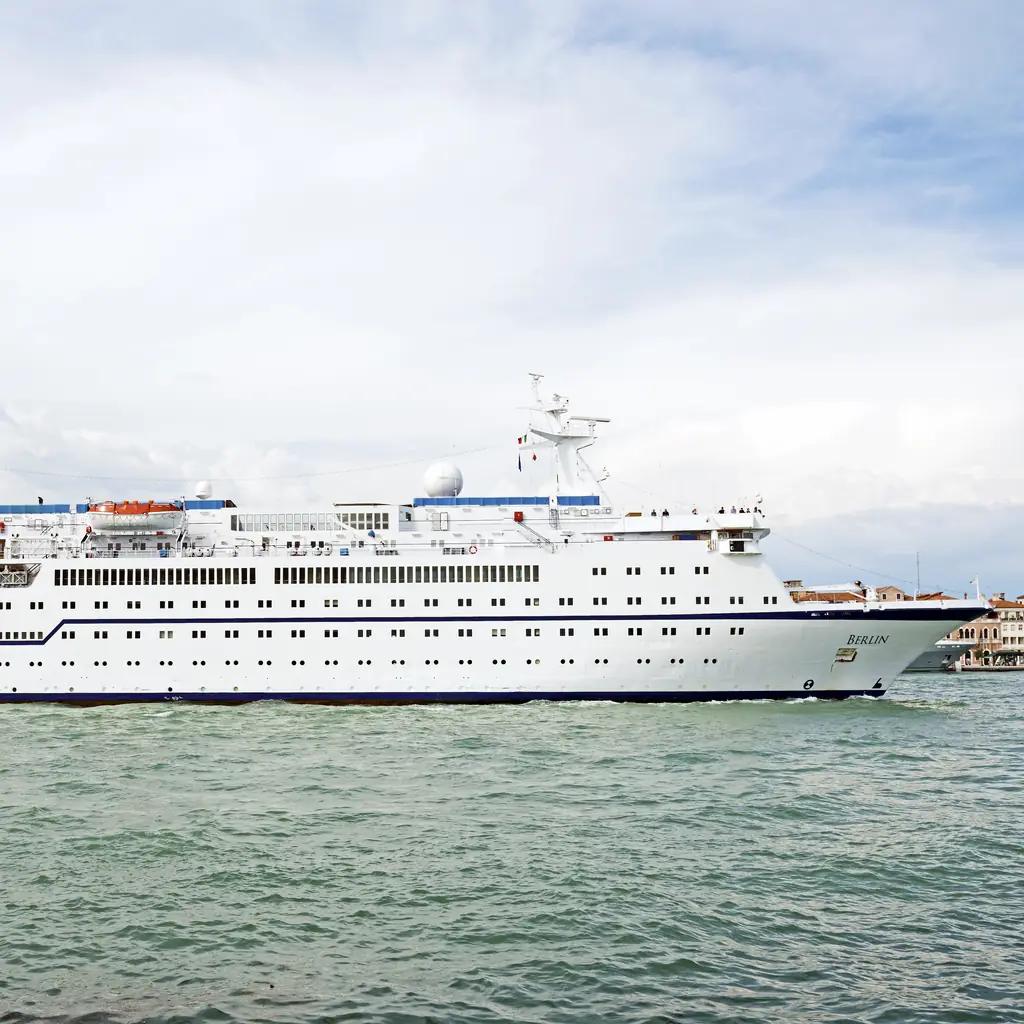
Venice slipped the most because the approach that made it famous is closed to most ships. Since a 2021 decree-law, ships above 25,000 gross tons have been kept out of the Giudecca Canal and the lagoon berths. The Adriatic port network AdriaPorts said in March 2026 that the lagoon ports and Chioggia expect 366 calls and about 543,000 passengers this year, across ocean and river cruises. That is 12 percent fewer passengers on the same number of calls. More than 90 percent of the cruise lines using them are premium or luxury, and ships are generally under 250 meters.
More than 95 percent of the calls are turnarounds, meaning the ship starts or ends a cruise there instead of dropping in for the day. If you booked a mainstream ship for the slow glide past the city, you will not get that view.
Venice is doing well on its own terms, with off-season passengers up about 80 percent. Before you book: Ask which port your ship uses and how you reach the city from it. If the city is your goal, a smaller ship or a hotel stay now suits you better.
Image credits
- Photo: Balou46 / Wikimedia Commons (CC BY-SA 4.0)
- Photo: Matt H. Wade / Wikimedia Commons (CC BY-SA 2.0)
- Photo: W. Bulach / Wikimedia Commons (CC BY-SA 4.0)
- Photo: Bybbisch94, Christian Gebhardt / Wikimedia Commons (CC BY-SA 4.0)
- Photo: A.Savin / Wikimedia Commons (CC BY-SA 3.0)
- Photo: Gkuriger / Wikimedia Commons (CC BY-SA 4.0)
- Photo: KetchikanMan / Wikimedia Commons (CC BY-SA 4.0)
- Photo: Kiran891 / Wikimedia Commons (CC BY-SA 4.0)
- Photo: Crispas / Wikimedia Commons (CC BY-SA 3.0)
- Photo: Cristo Vlahos / Wikimedia Commons (CC BY-SA 4.0)
- Photo: UnFUG-Fabi / Wikimedia Commons (CC BY-SA 4.0)
- Photo: Lucicort / Wikimedia Commons (CC BY-SA 4.0)
- Photo: Friedrich Haag / Wikimedia Commons (CC BY-SA 4.0)
- Photo: Gillfoto / Wikimedia Commons (CC BY-SA 3.0)
- Photo: Ank Kumar / Wikimedia Commons (CC BY-SA 4.0)
- Photo: Spike / Wikimedia Commons (CC BY-SA 4.0)
- Photo: Dietmar Rabich / Wikimedia Commons (CC BY-SA 4.0)
- Photo: Kleon3 / Wikimedia Commons (CC BY-SA 4.0)
- Photo: Lee Vilenski / Wikimedia Commons (CC BY-SA 4.0)
- Photo: Tony Hisgett from Birmingham, UK / Wikimedia Commons (CC BY 2.0)
- Photo: Didier Descouens / Wikimedia Commons (CC BY-SA 4.0)
Sources (44)
- Spectrum News (AP): federal ruling blocks Hawaii’s tourist tax on cruise ships (Jan 1, 2026)
- Cruise Hive: cruisers expected a new Hawaii fee until a court ruling changed the plan (Jan 3, 2026)
- Caribbean Journal: St. Thomas WICO projects 1.25 million cruise passengers and 359 calls (Jun 23, 2026)
- TravelExtra: Oslo plans new tax for cruise passengers (Oct 10, 2026)
- Finestre sull’Arte: from 2025 visiting the Acropolis will cost 30 euros (Dec 29, 2023)
- Paliparan: price of tickets to visit the Acropolis increases by 50% (Apr 8, 2025)
- ot.gr: Acropolis pilot program sets a maximum cap on daily visitors (Aug 2, 2023)
- Come Cruise With Me via AOL: Portland, Maine raises cruise passenger tariff fees (Mar 17, 2026)
- CruiseMapper: Juneau passenger caps shift Alaska cruise ships toward Ketchikan (Jan 18, 2026)
- Nassau Cruise Port: another record year (Feb 2, 2026)
- Cruise Hive: Nassau port strikes another huge daily cruise passenger record (Apr 13, 2025)
- Riviera Maya News: Cozumel cruise arrivals up 7.1% in early 2026 (May 26, 2026)
- Riviera Maya News: cruise passenger fee at Mexican ports to rise to $10 (Jul 31, 2026)
- CruiseMapper: Mexico doubles cruise passenger fee to $10 (Aug 17, 2026)
- Cabo Sun: Cabo sets an all-time cruise passenger record (May 22, 2026)
- Ports de Balears: the port of Ibiza plans cruise ship calls for 2026 (page dated 09/04/2026)
- Travel Weekly Australia: new fee for Mykonos and Santorini disembarkation (Jul 22, 2025)
- Greek City Times: Greece clamps down on Santorini crowds (Jun 9, 2026)
- Municipal Port Fund of Thira: cruise arrival and departure evaluation for 2025 and 2026 (decision 182/2024, Sep 19, 2024)
- Majorca Daily Bulletin: renewed Palma agreement on cruise limits (Jun 28, 2026)
- Juneau Empire: limit of 16,000 cruise passengers daily agreed by CBJ and industry (Jun 2, 2024)
- Maritime Executive: Port of Barcelona reduces cruise terminals (Jul 18, 2025)
- Ara: Collboni wants to eliminate large cruise ships in Barcelona (May 14, 2026)
- Ara: Barcelona endorses charging 30 euros to cruise passengers in transit starting in 2030 (Sep 22, 2026)
- Cruise Hive: Barcelona slams cruise passengers with a maximum €24 daily tax (Jul 20, 2026)
- Catalan News: Barcelona to increase tourist tax for cruise passengers in transit (Sep 25, 2026)
- Keystone-SDA via blue News: Cannes restricts docking of giant cruise ships (Jun 29, 2025)
- CruiseMapper: Cannes limits daily cruise ship passengers to 6,000 (Jun 30, 2025)
- Connexion France: Nice mayor backtracks on banning large cruise ships (Mar 3, 2025)
- Maritime Executive: French mayor confronts a cruise ship that ignored the port ban (Jul 4, 2025)
- Travelnews: Nice court overturns cruise ban (Jul 15, 2025)
- Cruise Hive: ports in the French Riviera move to regulate cruise ship calls (Oct 16, 2025)
- Cruise Industry News: Amsterdam could ban cruise ships by 2035 (Jan 26, 2026)
- DutchNews: Amsterdam to hike tourist tax to 20%, close sea cruise terminal (Jun 3, 2026)
- Islands: five bans that will affect popular cruise ports in 2026 (Mar 18, 2026)
- Cruise Industry News: new taxes reportedly pushing cruise ships away from Iceland (Nov 2, 2025)
- Maritime Executive: passenger tax causes Iceland’s cruise business to decline (Oct 20, 2025)
- Iceland Review: cruise ships cancelling visits to Iceland over the new fee (Jan 25, 2025)
- Húsavík.com: cruise passenger fee lowered after strong pushback (Dec 9, 2025)
- Skatturinn (Iceland Revenue and Customs): fees on cruise ships, infrastructure fee of 1,600 krona (page read Nov 16, 2026)
- Bangor Daily News: federal judge overturns part of Bar Harbor’s cruise ship ban (May 15, 2026)
- Bangor Daily News: Bar Harbor’s cruise ship battle has cost the town $111K in less than a year (Jun 11, 2026)
- Bar Harbor Story: Sidman appeals the federal cruise ship ruling (Jun 18, 2026)
- AdriaPorts: Venice and Chioggia open the cruise season (Mar 16, 2026)